

You bought the skylight for the light. Then July arrives, and the breakfast room in your Scarsdale Colonial feels overlit by 9 a.m. In January, that same opening can make a sitting area feel colder than the rest of the room, even when the heat is running.
That tension sits at the center of covering skylight inside. A skylight can be one of the most beautiful architectural features in a home, but it can also become the least controlled source of light, heat, privacy, and visual comfort. In Westchester homes with vaulted ceilings, lofted family rooms, and renovated attics, the right solution has to do more than soften the sun. It has to perform on an angle, integrate cleanly with the architecture, and operate reliably where you can’t reach it.
The Skylight Dilemma in the Modern Westchester Home
A skylight rarely causes trouble all at once. It starts with a television glare in the family room. Then you notice the sofa fabric taking stronger sun than the side windows ever delivered. In a top-floor bedroom, early morning light starts waking you before you’re ready.
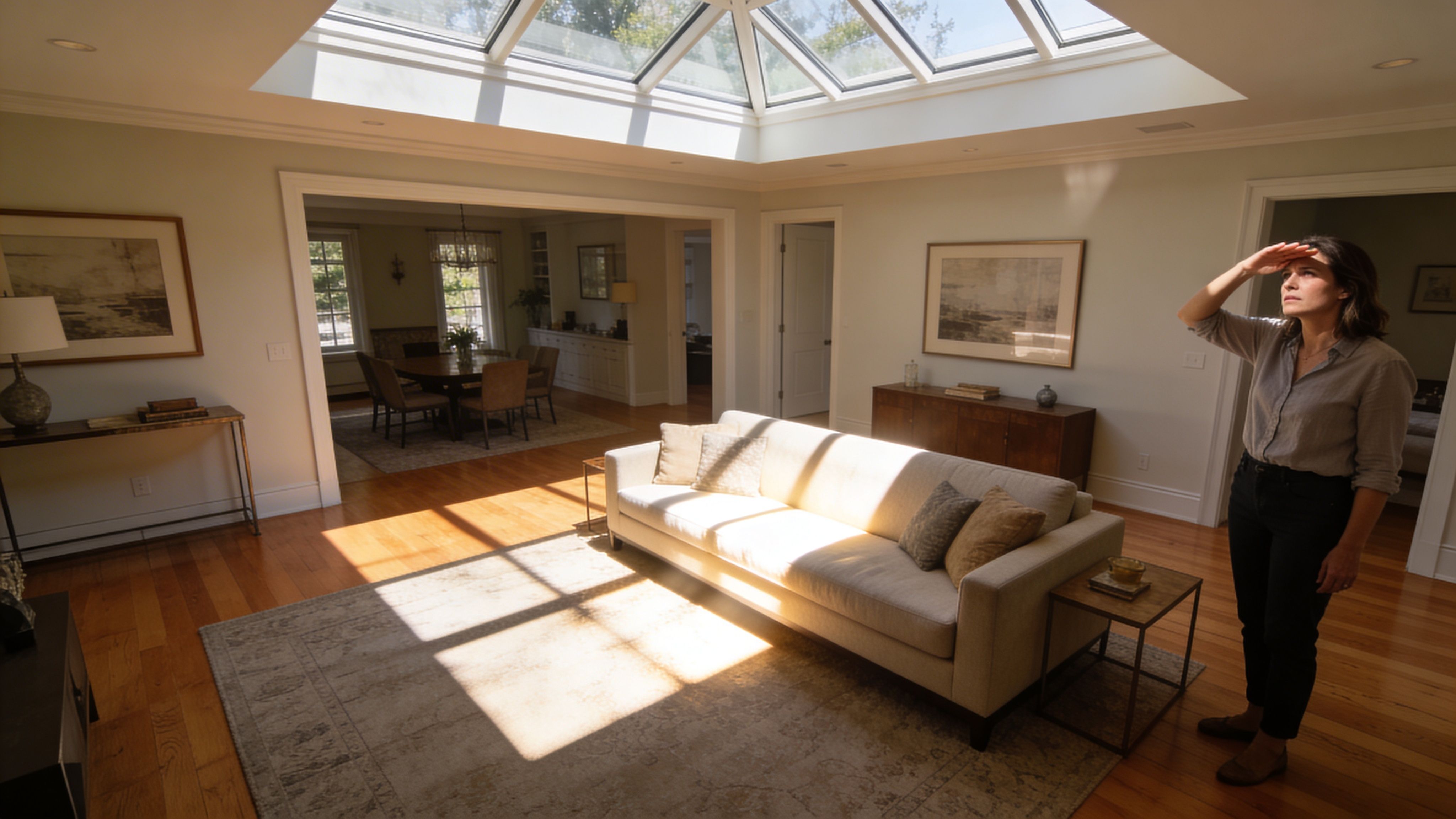
In Westchester, the climate makes those frustrations sharper. Our winters punish any weak point in the building envelope, and our humid summers turn overhead glass into a source of solar gain right when you want rooms to feel composed and cool. A skylight can flood a Rye kitchen with beautiful daylight in October, then overheat the same room in August.
Why skylights need a different treatment strategy
A standard window treatment isn’t designed for this assignment. Skylights sit overhead or on a pitch. They receive direct sun at different angles throughout the day, and many are installed in locations where operation by hand is awkward or unrealistic.
That changes the specification completely. The treatment has to account for:
- Angle and tension: A covering has to stay aligned on a slope, not sag, drift, or bind.
- Thermal performance: It needs to slow heat transfer, not just dim the room.
- Light discipline: It must reduce glare without making the space feel closed off.
- Aesthetic restraint: The treatment should support the architecture, not visually interrupt it.
For homes in northern climates like Westchester County, properly installed interior skylight coverings such as cellular shades can contribute to 12 to 33% savings on heating and cooling costs, depending on the existing window condition, by creating an insulating barrier, according to the U.S. Department of Energy’s guidance on windows, doors, and skylights.
Beauty isn’t enough if comfort suffers
We see this often in renovated Tudors and newer estates alike. The skylight looked brilliant on the architect’s elevation and perfect on move-in day. Living with it is different.
A reading nook becomes too bright at midday. A guest suite under the roofline feels exposed after dark when neighboring upper stories overlook the roof. A double-height stair hall looks dramatic but needs softer control to keep the light elegant rather than harsh.
Practical rule: If a skylight affects room temperature, glare, or privacy on a daily basis, it isn’t just a design feature anymore. It’s a performance issue.
The right answer isn’t to fight the skylight. It’s to finish it properly with a solution matched to the room, the pitch, and the way you live in the home.
Actionable Design Tip: When evaluating a skylight, don’t ask only, “How do I block this light?” Ask which problem matters most in that room: glare, winter heat loss, summer heat gain, privacy, or hard-to-reach operation. The best covering skylight inside solution starts with that priority.
Curated Skylight Solutions for Discerning Tastes
Not every skylight should be treated the same way. A media room in Armonk needs different performance than a breakfast area in Bronxville, and a finished attic bedroom calls for a different visual language than a sleek contemporary great room.
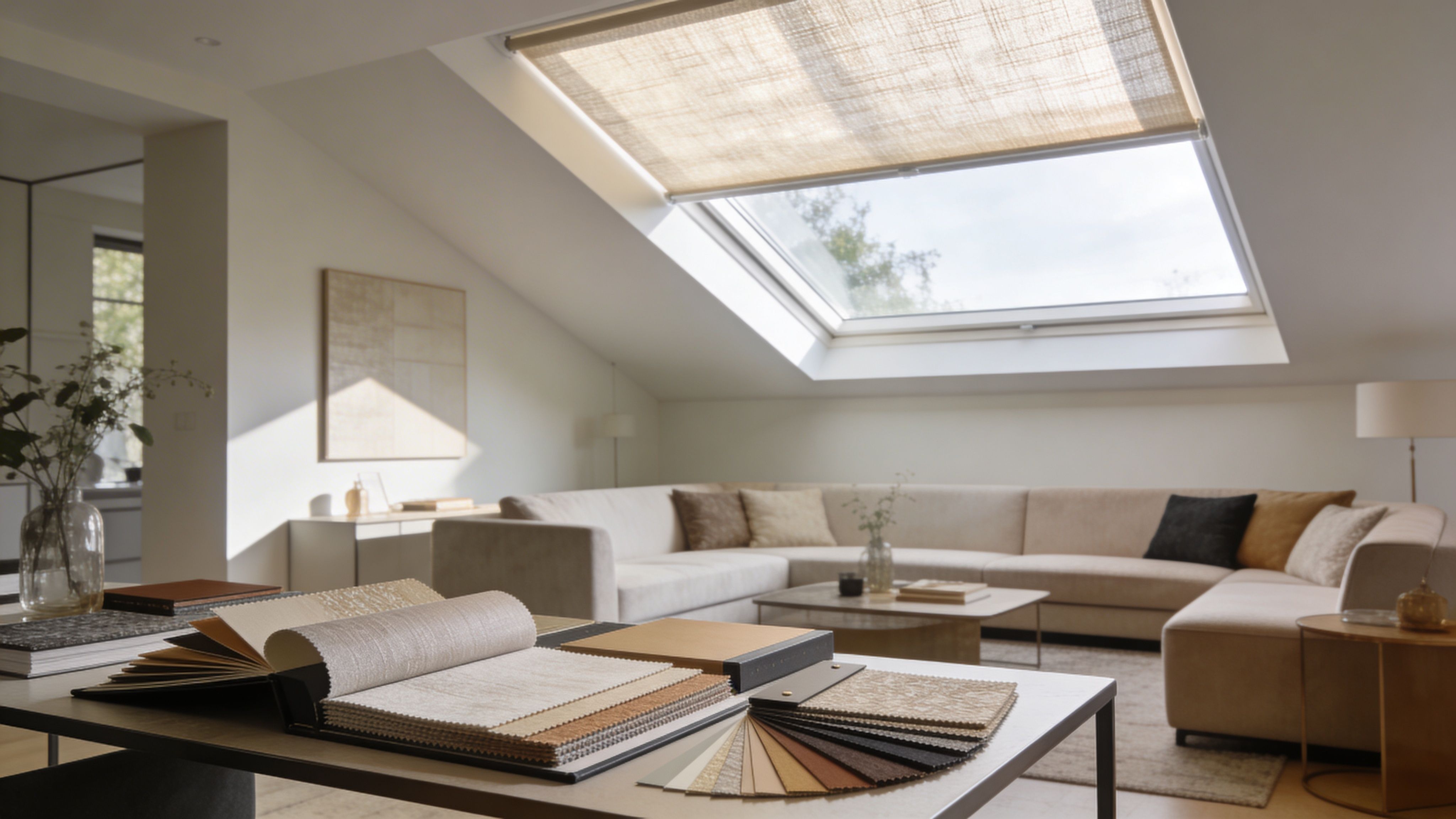
Cellular skylight shades for insulation and comfort
If your first concern is thermal performance, cellular shades are usually where the conversation starts. They solve the most common complaint with skylights in the Northeast: rooms that feel too hot in summer and too exposed to heat loss in winter.
Motorized cellular skylight shades with 3/8-inch double honeycomb construction are specifically engineered for angled installations. That design creates a stronger thermal barrier while also helping manage moisture around the opening, as described by North Solar Screen’s motorized cellular skylight shade specifications.
What that means in real homes:
- Top-floor bedrooms: They soften early morning light and make the room feel more stable across seasons.
- Vaulted family rooms: They cut harsh midday brightness without making the ceiling look heavy.
- Home offices under the roofline: They reduce visual fatigue where overhead glare lands on screens and polished surfaces.
Cellular shades also have a visual softness that works well in painted Colonials, shingle-style homes, and transitional interiors. They don’t compete with millwork or furnishings.
In a room where the skylight is the brightest surface, a soft-textured treatment usually creates a calmer result than a hard reflective one.
Actionable Design Tip: If the room already feels chilly in winter or overheated in summer, prioritize a double honeycomb skylight shade before focusing on decorative style. Performance should lead the selection.
Roller and solar shades for cleaner lines
Some homes need a more minimal expression. In contemporary residences, renovated loft spaces, and kitchens with crisp architectural detailing, roller and solar shades offer a quieter visual profile.
These are often the right call when you want to manage brightness without adding visible bulk. They suit interiors where the skylight should remain part of a clean ceiling composition rather than become a noticeable fabric feature.
A few strong use cases:
- South-facing living areas: Solar fabrics reduce glare while preserving a lighter, more open feel.
- Modern kitchens: A slim roller system keeps sightlines clean around steel, stone, and slab cabinetry.
- Loft conversions: Minimal hardware aligns better with industrial or contemporary detailing.
The trade-off is straightforward. Roller and solar shades usually prioritize sleekness and glare control over maximum insulation. That doesn’t make them inferior. It makes them specific.
For homeowners weighing these options at the design stage, this overview of solar shade applications and styles is useful for understanding where they fit best.
Plantation shutters for architectural permanence
Shutters aren’t appropriate for every skylight. But in the right setting, they can be stunning.
They tend to work best where the skylight opening is part of a room with strong architectural character and where a fixed, precise look matters as much as the light control itself. Think a refined study, a dressing room, or a heritage-style home where layered millwork already defines the interior.
Their value is less about softness and more about structure:
- Architectural presence: They can make a skylight feel integrated rather than incidental.
- Defined light control: Louvers allow a measured quality of light.
- Design continuity: They echo other shuttered openings in the home.
They are not the universal answer for angled or inaccessible skylights. In many overhead applications, especially where motorization matters, shades remain the more practical specification.
What doesn’t work well in luxury homes
The market is full of generic suggestions for covering skylight inside. Most of them ignore the practicalities of custom homes, steep pitches, and day-to-day convenience.
The weakest solutions tend to share the same problems:
- Off-the-shelf films: They may reduce brightness but don’t give adjustable control.
- Temporary draped treatments: They often look improvised and visually disrupt the ceiling line.
- Basic manual options in high ceilings: They become difficult to use, then stop being used at all.
- Poorly fitted products: Even small gaps can create light leaks that defeat the purpose.
The issue isn’t just appearance. It’s longevity, alignment, and whether the treatment still feels effortless after the novelty wears off.
Actionable Design Tip: Choose the product category by room function first, then by aesthetic. A beautiful skylight covering that doesn’t solve glare, insulation, or access will always feel like the wrong specification over time.
Performance Compared A Practical Decision Framework
Selection gets easier when you compare options by what they do, not just how they look. Homeowners often begin with style, then realize the room has a more practical priority. A media room needs glare control. A guest suite may need privacy and better thermal performance. A sunroom may need a lighter touch.
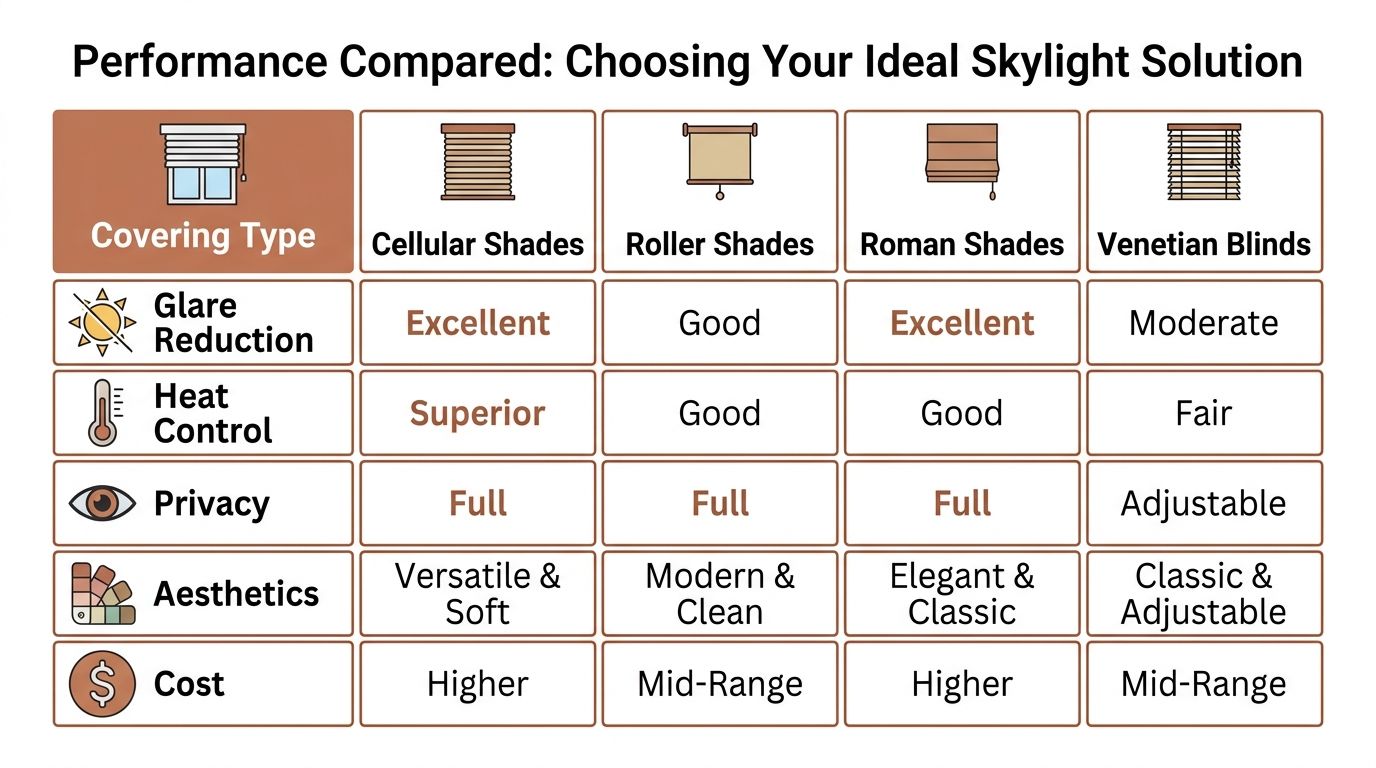
Professionally installed, high-performance skylight shades from brands such as Norman or Graber can reduce winter heat loss by up to 45%, which gives them a meaningful advantage over generic films or drapes on pitched roofs, according to this guide to covering a skylight from inside.
Skylight covering performance comparison
| Solution Type | Insulation Value | Light & Glare Control | Aesthetic | Ideal For… |
|---|---|---|---|---|
| Cellular shades | Best among the core options discussed here | Excellent, from filtered to room-darkening depending on fabric | Soft, neat, versatile | Bedrooms, family rooms, upper-floor living spaces |
| Roller shades | Moderate | Good, especially in screen and light-filtering fabrics | Clean, modern, restrained | Kitchens, contemporary interiors, glare-prone spaces |
| Solar shades | Moderate | Strong glare management while keeping a more open feeling | Minimal, architectural | Great rooms, lofts, spaces where visual lightness matters |
| Plantation shutters | Moderate to good depending on build and fit | Strong directional control | Formal, architectural, permanent-looking | Studies, dressing rooms, traditional homes |
The trade-offs become clearer when the room is specific.
How to choose by room behavior
A skylight over a breakfast table doesn’t need the same answer as one over a bed. In practice, we look at how the room behaves at its most difficult time of day.
For example:
- Morning bedroom glare: Cellular shades usually win because they offer comfort and stronger insulation.
- Afternoon glare in a modern den: Roller or solar shades often feel cleaner and more proportional.
- Formal room with strong architectural detailing: Shutters can be compelling if the skylight configuration supports them.
If you’re deciding between the two most common contenders, this comparison of roller shades vs cellular shades helps clarify the visual and functional differences.
The best skylight treatment isn’t the most feature-rich option. It’s the one that solves the room’s most persistent problem without looking like an afterthought.
Actionable Design Tip: Stand in the room at the exact time the skylight bothers you most. If the primary complaint is temperature, lean cellular. If it’s visual sharpness and glare in a cleaner-lined room, start with roller or solar.
The Art of Effortless Control Motorization and Smart-Home Integration
For most skylights, motorization isn’t an upgrade added at the end. It’s part of the core specification. If the opening is overhead, beyond easy reach, or part of a whole-home lighting routine, manual operation stops making sense quickly.
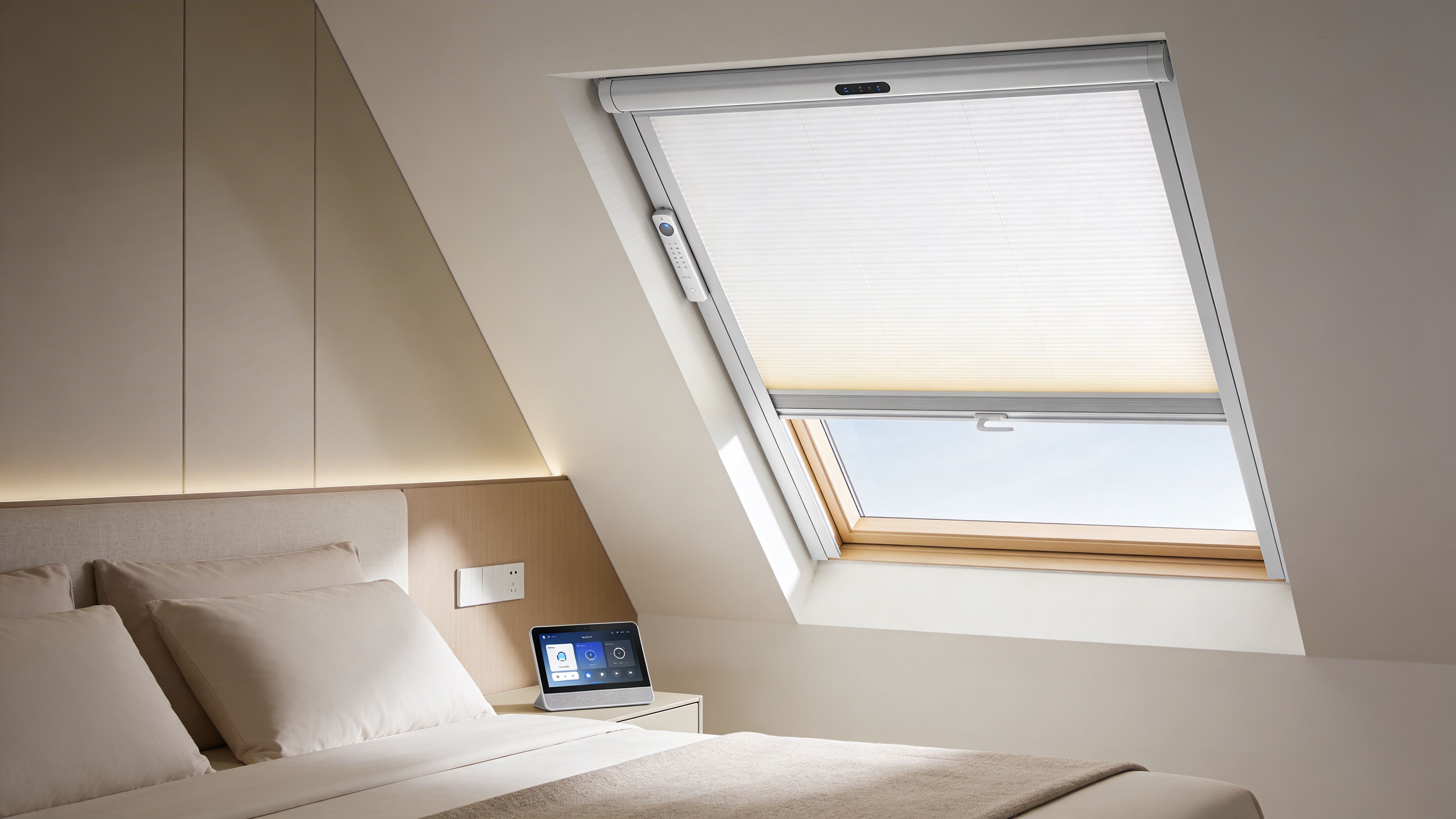
In luxury homes across Westchester, skylights are often located in the hardest places to access well. Double-height family rooms in Purchase, top-floor retreats in Rye, and vaulted stair halls in Greenwich don’t lend themselves to cords, extension poles, or inconsistent manual use. If you can’t operate a shade easily, you won’t use it consistently. Then the skylight goes back to controlling the room instead of the other way around.
Why motorization changes the experience
A motorized skylight shade solves two problems at once. First, it makes the treatment functional. Second, it makes the control feel natural enough to use every day.
That matters more than many homeowners expect. The best skylight system should let you:
- Respond instantly to glare: Lower a shade when overhead sun hits the television or kitchen island.
- Protect privacy on demand: Close a skylight in a bathroom or loft suite without climbing or reaching.
- Support comfort automatically: Set routines around the times your home gets the strongest sun.
- Preserve visual calm: Eliminate dangling controls and keep the architecture clean.
This is also where smart-home integration becomes meaningful, not gimmicky. In homes already running coordinated lighting, climate, and shading scenes, skylight control should feel like part of the same language. Systems compatible with Lutron, Somfy, and PowerView-style automation give homeowners a much better experience than isolated remote-only setups.
Reliability matters more overhead
Skylight systems have less margin for mechanical inconsistency because they’re harder to access for service. That’s why engineering matters.
High-end skylight systems often use a single-motor tension mechanism, a consolidated design that improves reliability and longevity by reducing points of failure and supporting smooth overhead movement, as outlined by Hunter Douglas Architectural’s skylight tension systems.
That design logic is important in Westchester’s climate. Freeze-thaw cycles, indoor humidity shifts, and seasonal expansion all test moving parts. A cleaner mechanical architecture usually holds up better over time than a more complicated setup.
Design insight: The farther out of reach a skylight is, the more conservative the mechanical specification should be. Simpler systems with fewer failure points usually age better.
Smart scheduling is where luxury feels practical
The strongest smart-home projects don’t ask the homeowner to think about every shade movement. They build routines around the house itself.
A skylight shade can be programmed to close during the brightest part of the afternoon in a south-facing room, then reopen later to bring back natural light. In a primary suite, a room-darkening skylight treatment can become part of an evening scene with bedside lighting and privacy settings. In a great room, multiple shades can move together so the room stays visually balanced.
For homeowners considering a broader automated approach, this guide on motorized shades and smart blinds in Armonk, NY gives a useful look at how these systems fit into higher-end homes.
A short demonstration helps illustrate how much easier the experience becomes once skylight control is integrated into everyday living:
Where motorization makes the biggest difference
Not every room needs the same level of automation. These are the spaces where it tends to pay off most clearly:
- Vaulted living rooms: Light shifts dramatically over the course of the day, and overhead access is limited.
- Attic bedrooms and guest suites: Comfort and privacy often need adjustment without manual effort.
- Whole-home projects: Consistent control across standard windows and skylights creates a more cohesive experience.
- Designer-led renovations: Motorization preserves the cleanest finish because operation doesn’t require visible compromise.
Actionable Design Tip: If your skylight is hard to reach, visible from a main entertaining space, or part of a larger lighting and shading plan, specify motorization from the start. Retrofitting convenience after the design is finalized is rarely the most elegant path.
The Westchester Window Fashions Difference Expert Consultation and Flawless Installation
The difference between a skylight treatment that looks custom and one that performs is usually decided before the product is ever ordered. Skylights demand precision. A beautiful fabric or a premium motor doesn’t rescue a specification that was wrong for the opening, the pitch, or the room.
That matters even more now because smart shading has become a larger part of the luxury residential market. A 2025 data point cited in this skylight guide notes a 28% rise in smart shade installations in U.S. luxury homes, and it also points to the need for professional integration with systems like Lutron or Somfy to avoid misalignment, light leaks, and operational failures in hard-to-reach installations such as multi-story homes in Scarsdale or Greenwich, as referenced in this article on covering a skylight from inside.
Good skylight design happens in the room, not on a product page
A skylight never exists in isolation. The ceiling color changes how bright the light feels. Floor reflectivity changes glare. The trim profile affects how cleanly a treatment can sit inside the frame. In historic Westchester homes, that context matters even more because proportions and millwork are rarely generic.
That is why in-home consultation produces stronger results than ordering by category alone. The right specification depends on seeing the room’s real daylight, your furnishings, your finishes, and the relationship between the skylight and the rest of the windows in the space.
A consultation also resolves questions that online ordering glosses over:
- Will the treatment visually disappear or become a feature?
- Does the room need insulation first, or glare control first?
- Will a motorized system integrate cleanly with the home’s existing controls?
- Is the frame geometry suitable for the product being considered?
Installation quality shows up in the details
Skylight installations fail in subtle ways before they fail in obvious ones. A slight alignment issue can create a thin line of daylight that becomes irritating every morning. Improper tension can affect movement and shorten fabric life. Poorly planned placement can make a sleek product look awkward from the floor.
In higher-value homes, those details aren’t cosmetic. They’re the difference between a treatment that feels built into the architecture and one that feels added on later.
A skylight treatment should look inevitable once installed, as if the room was always meant to have it.
Professional installation is especially important for motorized systems because the setup has to account for both fit and function. The shade has to travel smoothly, stop consistently, and maintain visual discipline on an angle. In a whole-home project, that standard has to hold room after room.
Why discerning homeowners avoid improvised solutions
Luxury homes don’t reward shortcuts. A temporary answer might reduce brightness for a while, but it usually introduces a new problem: visible gaps, awkward operation, weak integration, or a finish that doesn’t match the room.
For interior designers, architects, and homeowners making long-horizon decisions, the more useful mindset is this: the skylight treatment isn’t a patch. It’s part of the home’s interior architecture.
That is especially true in Westchester County, where many homes combine historical character with modern expectations for comfort and automation. A Tudor in Bronxville, a waterfront property in Rye, and a newly built residence in Armonk all need different answers. What they share is the need for exact fit, restrained aesthetics, and dependable operation.
Actionable Design Tip: Before selecting any skylight product, insist on evaluating it in the context of the full room, including ceiling height, pitch, neighboring windows, and your existing smart-home environment. Skylights punish isolated decisions.
Conclusion Enhance Your Home with Intelligently Designed Skylight Solutions
A skylight should make a room feel better, not harder to live in. When the opening is properly addressed, you keep the architectural drama and natural light while gaining control over glare, comfort, privacy, and seasonal performance.
That is why covering skylight inside isn’t a decorative afterthought. It’s a design and engineering decision. The right custom treatment can soften harsh light in a family room, improve sleep conditions in an upper-floor bedroom, support energy efficiency in a demanding Northeast climate, and preserve the clean visual language of a beautifully designed home.
For discerning homeowners, the best outcome comes from choosing a solution that matches the architecture, operates effortlessly, and is installed with precision. That’s how a skylight moves from being a daily compromise to becoming one of the most refined and functional features in the home.
If you’re ready to turn an overbright, hard-to-control skylight into a polished part of your home, schedule a Complimentary In-Home Design Consultation in Westchester with Westchester Window Fashions. We bring curated materials, expert guidance, and professional motorization insight directly to your home so you can choose a skylight solution that fits your architecture, your lifestyle, and your long-term standards.


