

When selecting window treatments for your Westchester County home, the decision between real wood and faux wood blinds presents a classic design dilemma: the authentic, timeless character of natural materials versus the high-performance durability of modern composites. This choice is central to defining your home’s aesthetic, and as local design authorities, we are here to guide you through it.
The Enduring Appeal of Wood Blinds in Westchester Homes
There is a reason wood blinds remain a fixture in homes from the stately Colonials in Scarsdale to the charming Tudor-style residences in Bronxville. Their warm, classic aesthetic adds a layer of sophistication that is simply unmatched. As you look to capture that look, you are faced with a key decision: genuine hardwood or an advanced faux wood alternative?
This guide is designed to act as your trusted consultant, helping you navigate the choice that best fits your home’s unique style, your family’s lifestyle, and the demands of our Northeast climate. While the allure of real wood is strong, we find that discerning homeowners are increasingly seeking solutions that balance both value and style, making high-quality faux wood an exceptionally popular choice.
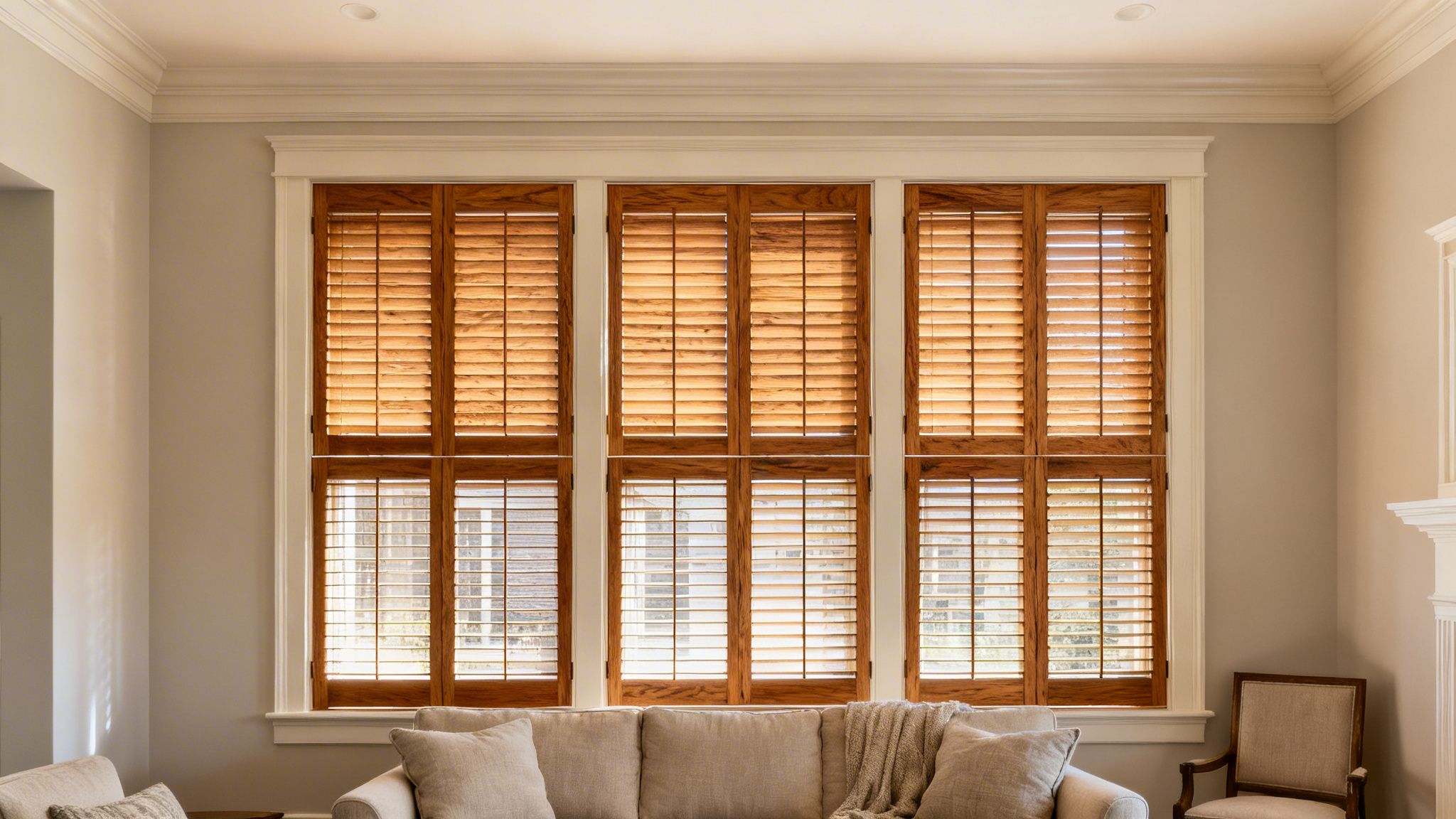
A Quick Comparison
To begin, let’s establish the fundamental differences that will guide your decision. This initial comparison breaks down the main trade-offs, which we will explore in greater detail throughout this guide, incorporating our insights from designing custom blinds and shades for Mamaroneck homes.
| Feature | Real Wood Blinds | Faux Wood Blinds |
|---|---|---|
| Material | 100% genuine hardwood (e.g., Basswood) | High-quality PVC or durable polymer composite |
| Best For | Living rooms, dining rooms, home offices, and bedrooms | Kitchens, bathrooms, laundry rooms, and basements |
| Key Advantage | Authentic beauty, unique grain, and lighter weight | Unbeatable moisture resistance and exceptional durability |
| Investment | Higher initial investment for premium material | More accessible investment, excellent long-term value |
Actionable Design Tip: Before focusing on material, consider the room’s function. For a high-humidity area like a master bathroom suite, the engineered resilience of faux wood is the technically superior solution. For a formal living room or quiet study where character is paramount, the unmatched authenticity of real wood often prevails.
A Side-by-Side Comparison of Appearance and Authenticity
When you are deciding between faux and real wood blinds for your Westchester home, the aesthetic impact is often the primary consideration. This is a personal choice: do you prefer the one-of-a-kind character of natural wood, or the clean, consistent finish of an advanced modern material? At Westchester Window Fashions, we view this as the most subjective, yet crucial, part of the decision.
Real wood blinds, typically crafted from premium hardwoods like Basswood, bring an authenticity you can both see and feel. Each slat possesses its own distinct grain pattern, with subtle variations in color and texture that impart a unique story. This organic warmth adds a layer of sophistication perfectly suited to a formal living room in a classic Rye colonial or a distinguished home office.
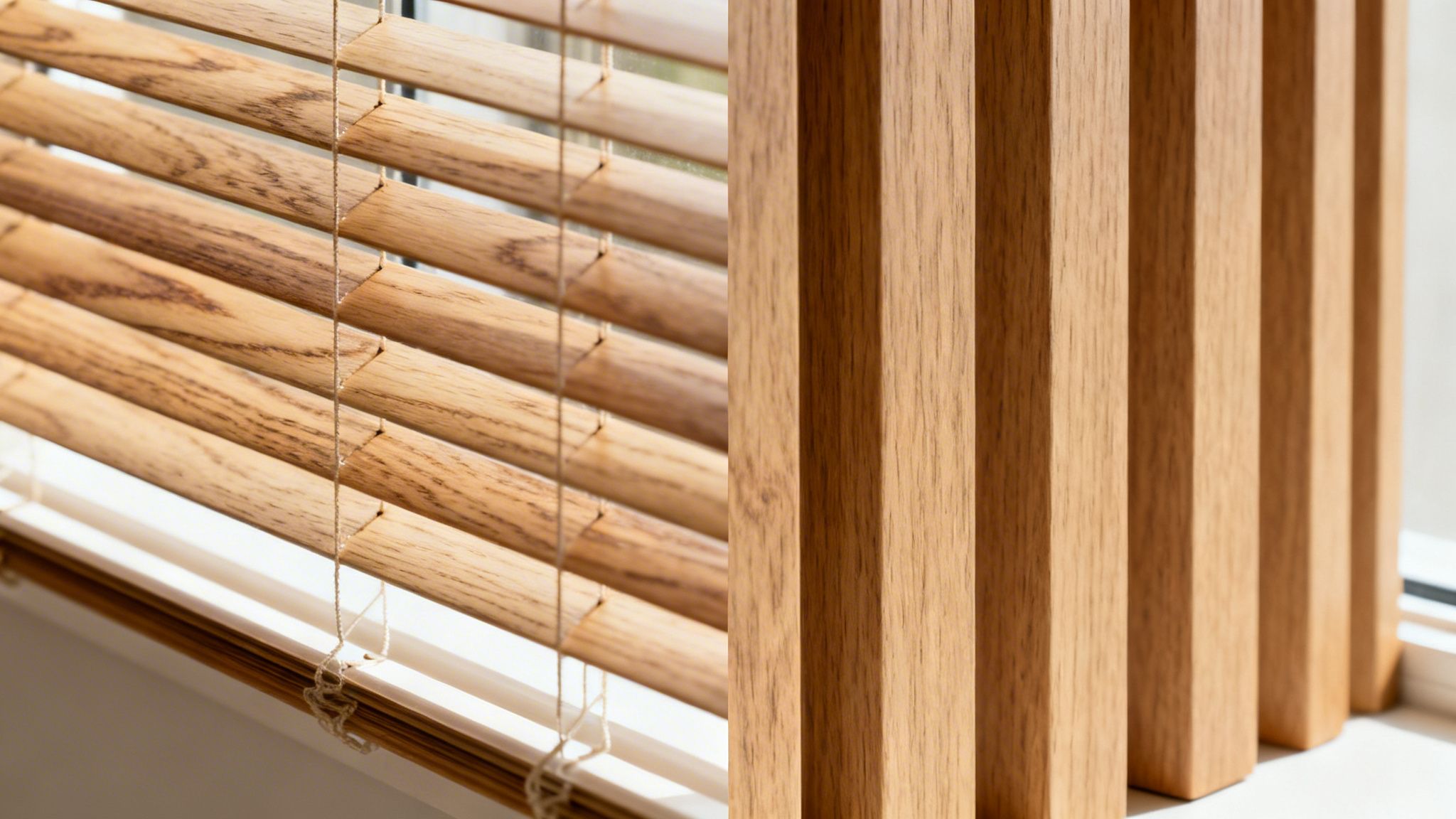
The Case for Faux Wood Uniformity
On the other hand, today’s high-end faux wood blinds from premier brands like Hunter Douglas and Graber are remarkably convincing. Advanced manufacturing techniques emboss realistic wood-grain textures onto durable composite materials, resulting in a perfectly uniform appearance from one slat to the next.
This creates a crisp, polished aesthetic that many of our clients prefer for contemporary or minimalist spaces, ensuring a flawless, cohesive look across multiple windows. For example, in a modern kitchen with clean lines, the uniformity of faux wood can complement the design without introducing the visual variation of natural grain.
While our trained designers can spot the difference upon close inspection, it is often difficult to distinguish high-quality faux wood from its genuine counterpart from a few feet away. The decision is not about which looks “better,” but about which style best complements the architectural narrative of your home.
Actionable Design Tip: The most effective way to decide is to observe samples in your home’s unique lighting. During our complimentary consultation, we bring both real and faux wood options to your home, allowing you to hold them against your window trim and see how the light interacts with each material—a critical step in making a confident choice.
Evaluating Durability and Moisture Resistance
When you select blinds for your Westchester home, you need a solution engineered to withstand our distinct four-season climate. The humid summers and dry, cold winters place significant stress on interior finishes, and this is where the faux wood vs. real wood blinds discussion becomes a matter of technical performance.
Performance in damp or humid environments is where faux wood holds a clear, undeniable advantage. For spaces like a master bathroom, the kitchen area above the sink, or a finished basement in a classic Scarsdale home, faux wood is unequivocally the superior choice. These rooms contend with constant steam, humidity, and temperature fluctuations.
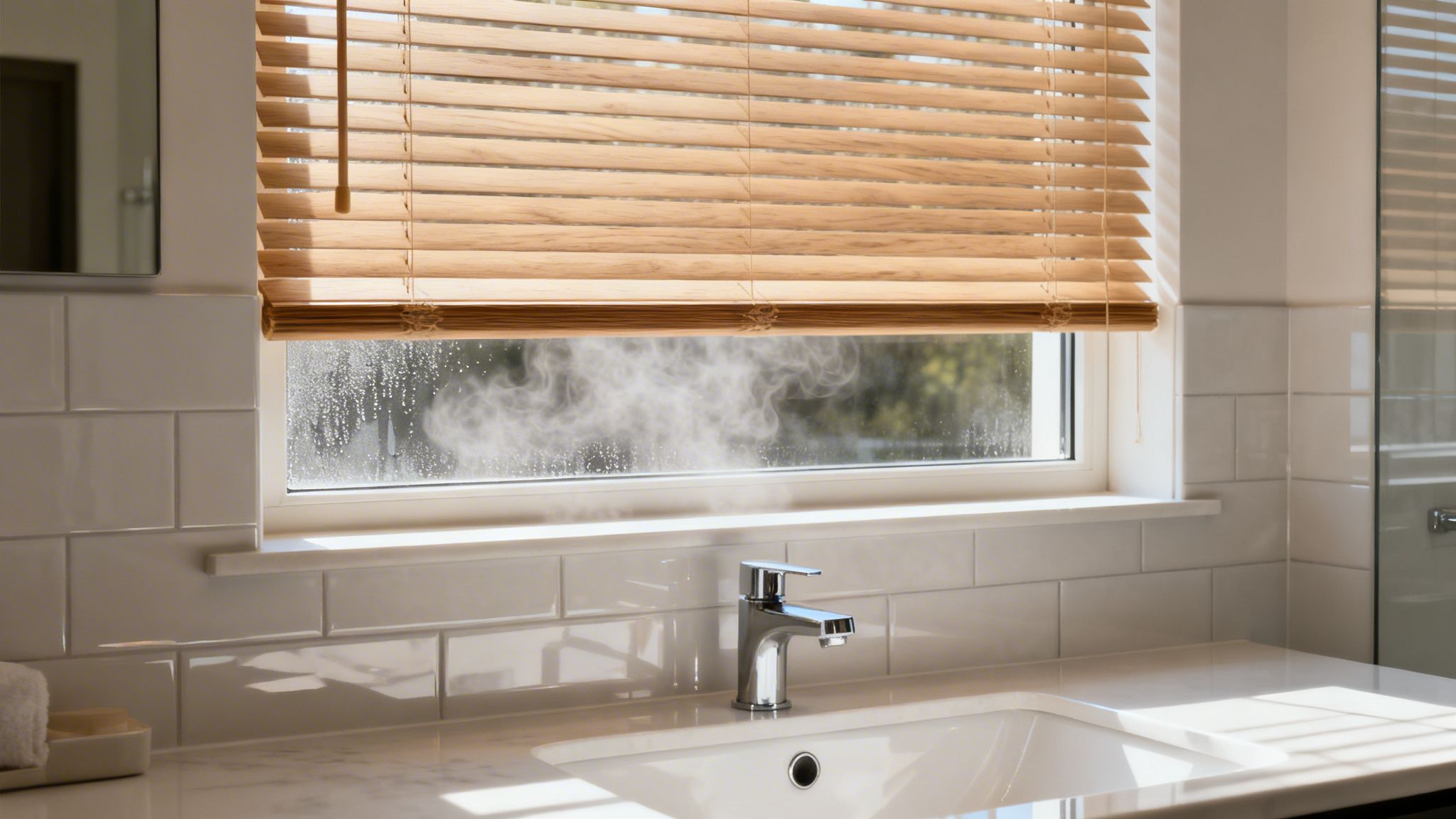
Performance in High-Humidity Zones
The fundamental difference between the two materials is their reaction to moisture. Real wood blinds, even when crafted from premium Basswood and expertly sealed, are an organic material. When exposed to consistent humidity above 50%—a common occurrence during our summers—they are susceptible to warping, cracking, or peeling over time. This makes them an unsuitable specification for bathrooms and kitchens.
Conversely, our premium faux wood blinds are fabricated from modern composite or PVC materials that are completely waterproof and exceptionally durable. They can withstand direct moisture without damage, ensuring they maintain their structural integrity and appearance for years. This inherent resilience also makes them a practical choice for high-traffic areas or homes with active children and pets.
Material Performance in Westchester Homes
To simplify, the right material choice depends entirely on the room’s purpose and environment. This table breaks down how each material performs under the conditions we encounter daily in Westchester County.
| Performance Factor | Real Wood Blinds | Faux Wood Blinds |
|---|---|---|
| Moisture Resistance | Vulnerable; can warp, crack, or peel in humidity. | 100% waterproof; ideal for bathrooms and kitchens. |
| Durability in High Traffic | Can be prone to dents and scratches. | Highly resistant to dings, scratches, and wear. |
| Best for Northeast Climate | Excellent for dry rooms like studies or bedrooms. | Superior for high-humidity areas and basements. |
| Longevity | Long-lasting with proper care in dry environments. | Exceptional lifespan under all interior conditions. |
Actionable Design Tip: We advise you to create ‘performance zones’ when planning your window treatments. Designate bathrooms, kitchens, and laundry areas as ‘high-humidity zones’ best served by faux wood. This allows you to reserve ‘dry zones’—such as bedrooms, dining rooms, and home offices—for the timeless appeal of real wood.
Comparing Light Control, Insulation, and Energy Efficiency
When we consult with Westchester homeowners about faux wood vs. real wood blinds, the conversation invariably moves from aesthetics to performance. How your window treatments manage sunlight and impact energy consumption are critical considerations, particularly with our region’s distinct seasons.
Both options provide excellent light control. The slats can be tilted to precisely manage incoming sunlight, protect your valuable furnishings from UV degradation, and eliminate glare. Slat size—typically 2” or 2.5”—is also a key factor. We find the wider 2.5” slats offer a cleaner, more expansive view akin to shutters when open, while providing superior light blockage and privacy when closed.
Thermal Performance in the Northeast Climate
Here, the material science of each option becomes significant. Real wood is a natural insulator. Its cellular structure is inherently effective at slowing thermal transfer, giving it a slight advantage in retaining heat during our cold New York winters. For a north-facing study or a bedroom that feels perpetually drafty, real wood blinds can contribute to a noticeably cozier environment.
Conversely, high-quality faux wood blinds feature a dense composite structure that excels at blocking solar heat gain. During a hot Westchester summer, they create a formidable barrier, preventing intense sun from increasing interior temperatures and reducing the load on your air conditioning system. This makes them the technically superior choice for south-facing rooms that receive direct afternoon sun.
While both materials enhance energy efficiency, exploring advanced solutions like our Duette® Honeycomb Shades, which can achieve an R-value of up to 7.0 and block 99% of UV rays, allows for a more specialized energy strategy than what roller shades vs cellular shades can offer.
Actionable Design Tip: For south-facing rooms that endure intense afternoon sun, we recommend specifying faux wood blinds with 2.5” slats for superior heat reduction. For north-facing rooms that tend to feel chilly, the natural insulating properties of real wood offer a more comfortable and energy-conscious solution for winter months.
Analyzing Cost Investment and Long-Term Value
When deciding between faux wood and real wood blinds, it is tempting to focus solely on the initial price. However, we guide our clients to consider the broader context of long-term value—a shift in perspective that ensures a more satisfying investment.
Real wood blinds carry a higher initial cost, a reflection of the premium hardwood material and the craftsmanship required to finish each slat. For a beautiful historic home in Larchmont, the authentic character of real wood often justifies this investment, enhancing the property’s intrinsic value.
A Question of Budget and Application
High-quality faux wood blinds, in contrast, provide a classic, sophisticated aesthetic for a more accessible investment. The cost difference can be substantial, particularly when outfitting an entire home. For a family in White Plains undertaking a whole-home renovation, these savings can be reallocated toward advanced features like motorization with industry-leading systems from Lutron or Somfy.
This is not about finding a “cheaper” option, but about making a strategic investment to achieve the best outcome for your entire project. The true value of faux wood lies in obtaining a durable, elegant solution at a price point that makes comprehensive home updates more attainable. For example, you can achieve a cohesive, high-end look throughout a large home without compromising on quality or exceeding your budget.
Actionable Design Tip: We recommend a hybrid strategy for many projects. Specify stunning real wood blinds for a highly visible, formal space like a dining room or home office. Then, utilize premium faux wood blinds in bedrooms, bathrooms, and basements. This approach maximizes your budget while achieving exceptional style and performance throughout your home.
Making the Right Choice for Your Home
So, how do you ultimately decide between faux wood blinds vs. real wood blinds? The answer lies in matching the material’s technical properties and aesthetic to your home’s specific needs and your personal style. After evaluating appearance, durability, and performance, the ideal choice for you becomes much clearer. At Westchester Window Fashions, our role as your design partner is to help you connect those dots.
There is no single “best” option—only the right one for your home, your lifestyle, and your investment. The final decision should be guided by how a room is used daily and your long-term expectations for performance and beauty.
A Clear Framework for Your Decision
To simplify the process further, we have created a visual guide to help you pinpoint which material aligns with your primary objectives, whether that is the authentic character of genuine wood or the practical need for a moisture-proof solution.
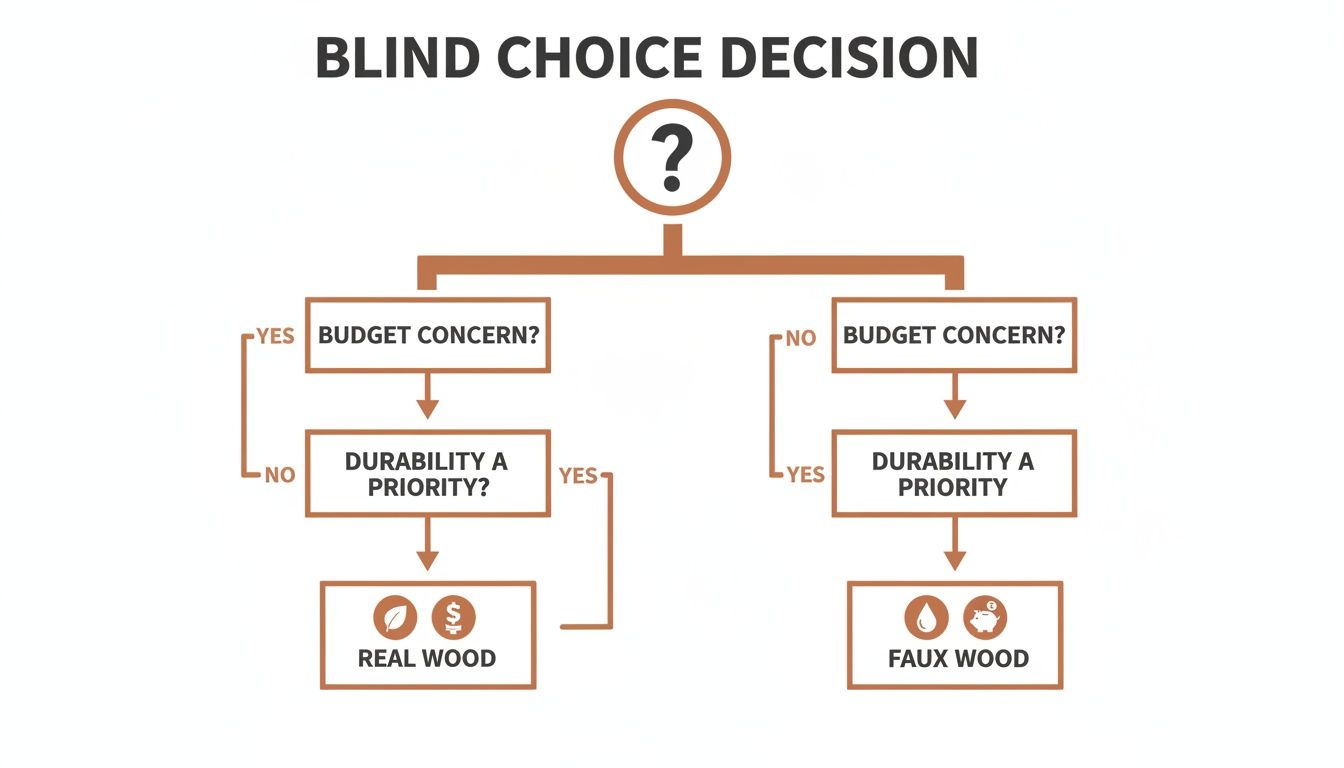
As the flowchart illustrates, the choice often hinges on a key question: are you seeking the natural, authentic character of real wood for a dry, climate-controlled room? Or do you require a robust, moisture-proof solution that can withstand the demands of a busy, family-focused home?
Here is how we recommend you frame the decision:
Choose Real Wood Blinds if: Your primary goal is to add timeless character and warmth to dry, formal spaces like a study, dining room, or bedroom. They are the ideal specification when the unique grain and authentic feel of real wood are your top priorities, such as when complementing the architectural integrity of a historic home.
Choose Faux Wood Blinds if: Your objective is a durable, stylish, and moisture-proof solution for a high-use home. They are the definitive choice for kitchens, bathrooms, laundry rooms, and any area with intense sun exposure where flawless, long-term performance is essential.
The final step is to experience these materials firsthand. There is no substitute for seeing and feeling the difference in your home’s unique light and architecture. This is the most effective way to make a decision you will be delighted with for years to come.
Actionable Design Tip: Are you ready to select the perfect blinds for your home? Contact Westchester Window Fashions to schedule your Complimentary In-Home Design Consultation and allow us to bring our design expertise and curated product collection directly to you.


