

Choosing the right window treatments is about so much more than just picking a color. Think of it like selecting the right architectural element for your home—it needs to enhance the aesthetic, but it must also perform a specific, critical function. As your local design authority, we are here to guide you through this process with precision and expertise.
Matching Your Vision to Your Windows
Before we explore materials and mechanisms, the most important step is to define the “why” behind your new window treatments. This is not merely a decorative touch; it is a fundamental component of your home’s comfort, privacy, and energy efficiency, especially in the varied climate of Westchester County.
Getting this first step right ensures the final product is not just something you look at, but a solution that genuinely enhances your daily life. Are you fighting afternoon glare in your home office overlooking the Hudson? Or perhaps seeking complete privacy in a master bedroom that faces a busy street in Scarsdale? Your answer will point us toward the perfect solution.
Clarifying Your Primary Goals
The sheer number of options can feel overwhelming. That’s why we always advise our clients to simplify. We can distill the decision-making process into three primary motivators:
- Privacy: This is a top concern, especially for bedrooms, bathrooms, and any rooms in close proximity to neighbors. The goal is to obscure the view from outside without plunging your room into darkness.
- Light Control: From softening the harsh midday sun to achieving total darkness for restorative sleep, managing light is key. It protects your furniture from UV damage, eliminates glare on screens, and sets the mood throughout your home.
- Aesthetics & Insulation: This is where style meets substance. You need a treatment that complements your home’s architecture, whether it’s a modern new build in Armonk or a historic Tudor-style residence in Bronxville. Simultaneously, the right treatment acts as a crucial layer of insulation, helping retain heat during our cold winters and block solar gain in the summer.
This flowchart helps visualize how your main priority can quickly narrow down the most suitable options for your space.
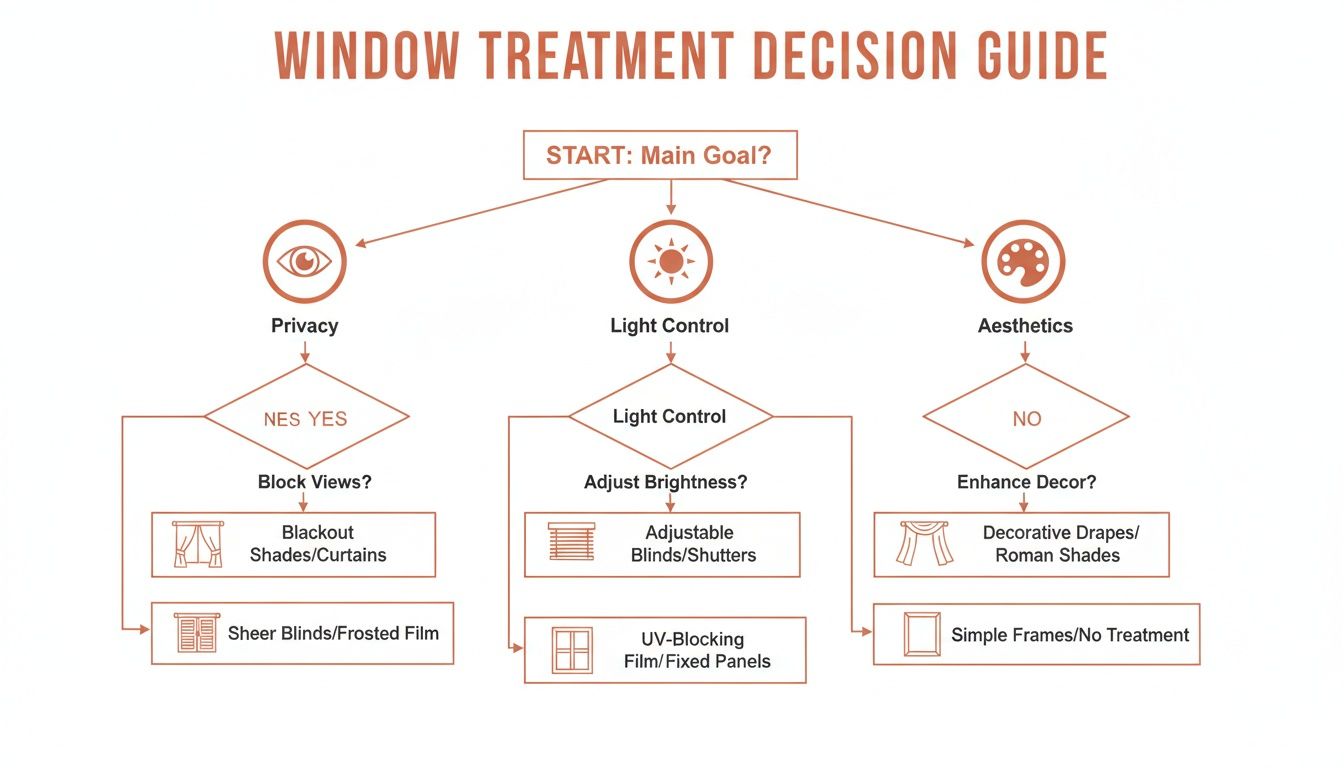
As you can see, once you determine if your top concern is privacy, light, or aesthetics, the path forward becomes much clearer.
From Goal to Solution
With your primary goal established, we can begin discussing specific solutions. For instance, that beautiful, sun-drenched living room in your Larchmont colonial might be the perfect candidate for solar shades that block up to 99% of UV rays, protecting your hardwood floors and fine art from fading without sacrificing the view.
On the other hand, for a historic home in Rye, the conversation may lean toward classic plantation shutters. They offer a timeless architectural feel while providing unparalleled control over both light and privacy.
The following table is a quick reference to help you connect your everyday needs to the right functional benefits.
Aligning Window Functions with Your Lifestyle
| Your Primary Goal | Key Functional Benefit to Seek | Example Application |
|---|---|---|
| Better Sleep | Room Darkening or Blackout | A north-facing master bedroom or nursery where complete darkness is essential for rest. |
| Productivity | Glare Reduction | Home office where you need to see your computer screen clearly without harsh light. |
| Curb Appeal | Architectural Style | Front-facing windows where treatments like plantation shutters add to the home’s exterior character. |
| Energy Savings | Insulation (R-Value) | Large, drafty windows where cellular shades can trap air and reduce heating and cooling costs. |
| Comfort | Light Filtering | A living room or kitchen where you want soft, natural light without sacrificing privacy. |
This table helps translate a lifestyle need directly into a window treatment feature, making your choice more intuitive and purpose-driven.
While many people use “blinds” and “shades” interchangeably, they are distinct categories of window treatments. If you’re curious, you can learn more about the distinction between blinds and shades in our detailed guide. Each type offers its own unique advantages.
Actionable Design Tip: Before our consultation, walk through your home with a notepad. For each room, identify its primary function and any specific challenges. For example: “Master bedroom: needs blackout privacy,” or “Home office: must reduce glare for video calls.” This simple exercise creates an excellent foundation for our design conversation.
Getting Light Control and Privacy Just Right

In any home, light is more than just brightness—it is an element of design. Your window treatments are the tools we use to sculpt that light, creating the perfect ambiance, ensuring your privacy, and protecting your interiors from the potent Northeast sun. How you manage light directly impacts how comfortable and usable each room feels.
The direction your windows face is a significant piece of this puzzle. Consider a south-facing great room in a White Plains home that receives intense, direct sun all day. The objective here is not just to reduce glare; it is about safeguarding your beautiful furniture and hardwood floors from UV degradation.
This is where technical specifications become critical. For these situations, we often recommend high-performance solar shades. These are not generic products; premium options can block up to 99% of damaging UV rays while preserving your view of the garden or surrounding landscape.
Finding Your Ideal Level of Light
Every room has different requirements, so the key is to match the window treatment’s function to the room’s purpose. We will help you navigate the options, from gentle light diffusion to complete darkness.
- Total Blackout for Better Sleep: For a master bedroom or nursery, absolute darkness is essential for quality rest. We often recommend blackout honeycomb shades, which are engineered with room-darkening fabrics and can be paired with side channels that completely eliminate light gaps. This is a perfect solution for north-facing master bedrooms where even faint light can be disruptive.
- Soft, Filtered Light for Ambiance: In a formal living room in Rye, you likely want to maximize soft, natural light without feeling exposed. Light-filtering cellular shades or elegant woven wood shades are fantastic choices here, casting a warm, inviting glow that enhances the space.
- Glare Reduction for Modern Life: Media rooms and home offices require specific light control to eliminate glare on screens. For these spaces, shades with a precise “openness factor” allow you to enjoy natural light without compromising productivity or your viewing experience.
Designing for Flexible Privacy
Your privacy needs can change throughout the day and from room to room. The right window treatment provides the flexibility to adapt instantly. For homes with windows facing the street, achieving daytime privacy without being confined to darkness is a common challenge we solve.
One of the most elegant solutions is the plantation shutter. Their adjustable louvers allow you to angle them precisely, bringing in natural light while blocking the view from the outside. They are a timeless choice, especially for the historic Tudor-style residences in Scarsdale, where they add both character and function.
Another sophisticated option is the dual shade, sometimes called a zebra shade. This design alternates bands of sheer and opaque fabric in a single unit. You can align the bands for a filtered view or overlap them for complete privacy, giving you incredible control. The growing popularity of these versatile products is no surprise; global window treatment trends show a strong consumer shift toward adaptable, high-performance solutions.
Actionable Design Tip: Walk through your home at different times of the day—morning, noon, and evening. Note where the afternoon sun creates harsh glare on a TV, where a piece of art might be fading from exposure, or which windows require more privacy at night. Bringing these specific observations to your consultation helps us engineer the perfect solution for you.
Selecting Materials for Lasting Beauty and Performance
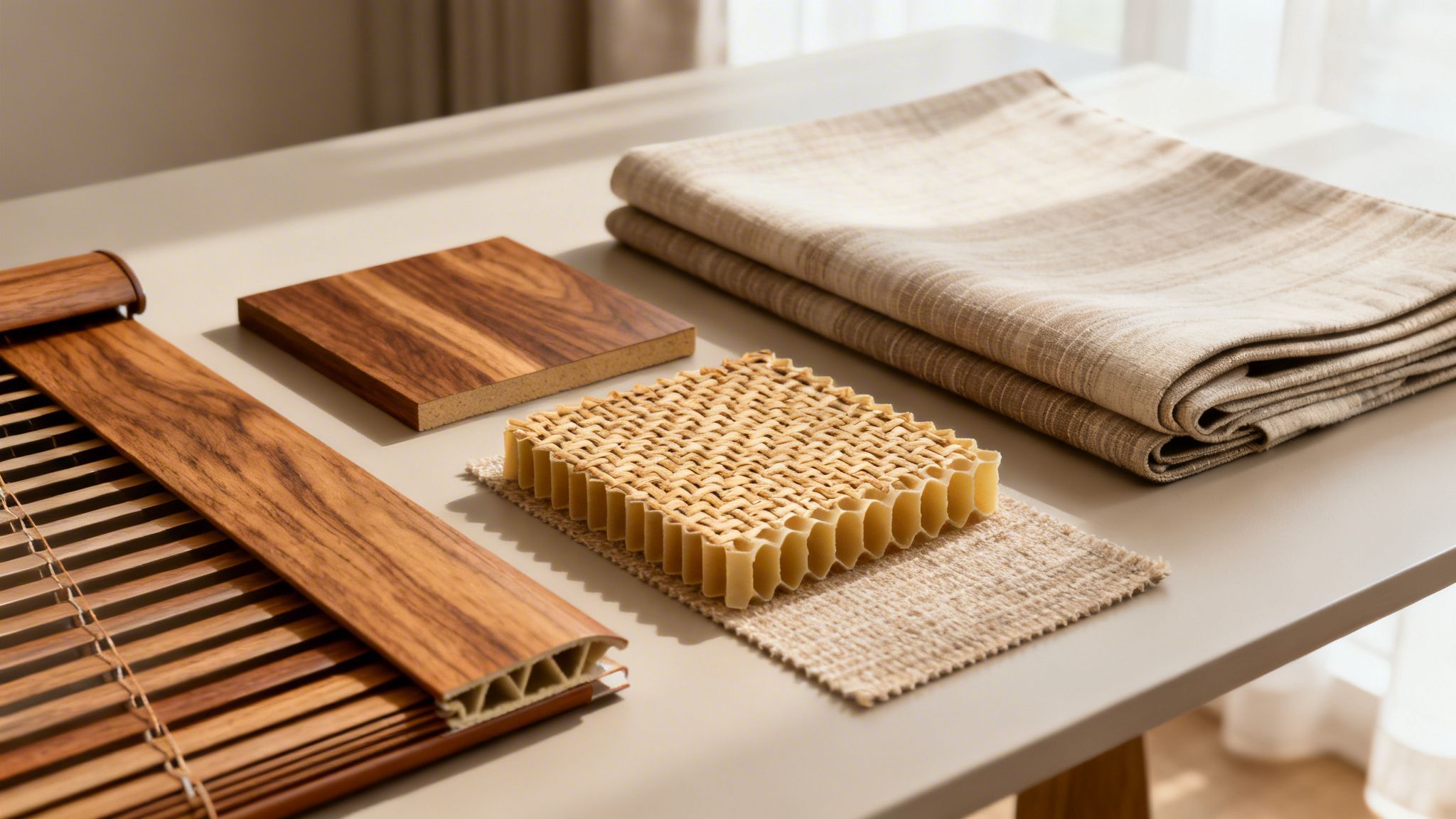
The material you select for your window treatments is truly the heart of the design. It defines the aesthetic, tactile quality, and long-term performance of your investment. When we guide our clients, we focus on matching premium materials to the unique styles and practical challenges we see every day in Westchester County homes.
Thinking about how to choose window blinds goes far beyond just selecting a color. It is about understanding how a material will perform in your specific environment. Let’s review some of the finest materials available and how each one solves a different problem with both function and style.
The Timeless Warmth of Authentic Wood
There is an undeniable warmth and character that only authentic wood blinds can provide. For a traditional Rye home filled with classic millwork and heirloom furniture, nothing creates a more cohesive, rich look than genuine wood. It is an investment in timeless style that simply cannot be replicated.
We often specify authentic wood from top brands like Graber or Hunter Douglas for spaces such as studies, dining rooms, and formal living areas. The natural grain adds a beautiful layer of organic texture. Keep in mind, however, that as a natural material, wood is best suited for rooms with stable humidity.
High-Performance Faux Wood Solutions
For rooms with high moisture—think of a master bathroom overlooking the Long Island Sound or a busy kitchen—high-end faux wood is unequivocally the best choice. Today’s composite materials provide the handsome look of real wood but are engineered for superior durability. They will not warp, crack, or peel, even with daily exposure to steam and humidity.
These are not the generic, off-the-shelf vinyl blinds found in retail stores. Premium faux wood offers a sophisticated finish and robust construction that easily stands up to the demands of an active family home. Our detailed guide on wood vs. faux wood blinds can help you dive deeper into this important decision.
The Superior Insulation of Cellular Shades
Here in the Northeast, energy efficiency is a high priority for homeowners. Cellular shades, often called honeycomb shades, are specifically engineered for insulation. Their unique cellular pockets trap air, creating a powerful barrier that slows heat transfer at the window. This provides a significant, year-round benefit, improving a window’s insulating R-value.
This provides two key benefits for your home’s energy management:
- In Winter: They help keep heated air inside, reducing the workload on your furnace and lowering energy bills.
- In Summer: They block intense solar heat, keeping your home cooler and cutting down on air conditioning costs.
For a large, west-facing window in a Pound Ridge home, installing an energy-efficient cellular shade is one of the most intelligent upgrades you can make for both comfort and savings.
The Artful Texture of Woven Woods and Fabrics
When you wish to introduce softness, texture, and a touch of artistry, we immediately turn to woven woods and fabric shades. These materials elevate window treatments from a simple function to a true design statement.
- Woven Wood Shades: Crafted from natural materials like bamboo, reeds, and grasses, woven woods bring an element of the outdoors inside. They create beautiful, dappled light and a relaxed, organic feel that’s perfect for a sun-drenched colonial home or a casual living area.
- Fabric Roman Shades: Roman shades offer the softness of drapery with the crisp, clean function of a shade. With an extensive library of fabrics available—from rich velvets to airy linens—we can tailor a look that perfectly complements your decor, whether it’s a formal dining room or a serene master suite.
Actionable Design Tip: Never finalize a material decision from a small online image. During our complimentary in-home consultation, we bring large samples of wood, fabric, and composite materials directly to you. This allows you to see and feel them in your home’s unique lighting, ensuring the choice you make is one you will love for years to come.
Exploring Control Options: From Manual to Smart Home
How you interact with your window treatments is just as important as how they look. The control system you choose defines your day-to-day experience, blending luxury with effortless practicality. Here at Westchester Window Fashions, we will guide you through all the options to ensure the function aligns perfectly with your lifestyle.
Modern manual systems have evolved significantly, and for those who prioritize a clean, minimalist aesthetic or have young children, cordless options are an excellent choice. Systems like Hunter Douglas’s LiteRise® allow you to gently push the shade up or pull it down, where it holds its position perfectly.
The Leap to Motorized Convenience
While modern manual controls are excellent, motorization is a transformative step up in both convenience and function. It turns your window treatments from something you must adjust by hand into a seamless part of your automated home. This is especially true for hard-to-reach windows, such as those in a two-story Larchmont great room or a skylight high above a staircase.
With a motorized system, you can operate an entire wall of shades with a single press of a button on a sleek remote. It provides quiet, smooth operation that makes daily adjustments completely effortless and is rapidly becoming the new standard for luxury living. As noted in insights on the global window coverings market, the demand for such automated solutions is a key driver of market growth.
Integrating with Your Smart Home
The true power of motorization is realized when it is integrated with a smart home system. This moves you beyond a simple remote and into full automation, where your shades operate on a schedule designed around your life. We work with leading systems from Lutron, Somfy, and Hunter Douglas PowerView® Automation to create these bespoke experiences.
Imagine your east-facing bedroom shades automatically rising with the sun to wake you gently, while the shades in your west-facing living room lower in the afternoon to mitigate solar heat. This is not just about convenience; it is about making your home more comfortable, secure, and energy-efficient. You can learn more about smart blind automation in our detailed guide.
Practical Applications for Motorization
Deciding where to implement motorization comes down to identifying specific needs within your home. We help you determine which windows will provide the greatest daily return on your investment.
- Skylights and High Windows: These are the most obvious candidates. Manually operating a skylight shade is often impossible, but motorization makes it simple, such as for hard-to-reach skylights in a vaulted-ceiling family room.
- Large Walls of Windows: In modern homes with vast expanses of glass, adjusting each shade individually is tedious. Motorization allows you to operate them all in perfect synchrony.
- Bedrooms: Automating blackout shades to close at bedtime and open in the morning can support healthier sleep cycles and adds a touch of everyday luxury to your routine. For example, programming blackout honeycombs in a north-facing master bedroom ensures optimal darkness.
- Energy Management: You can schedule shades to close during the hottest parts of the day in summer and open to capture passive solar warmth in winter—an active strategy to manage your home’s energy consumption.
Actionable Design Tip: As you think about how to choose window blinds, identify the windows you adjust most frequently and those that are physically difficult to reach. These are the prime candidates for motorization, providing a tangible return on investment through daily convenience and enhanced home comfort.
Why Professional Consultation and Installation Are Essential
Choosing the perfect window treatments is a journey with many considerations, from materials to control systems. However, the one decision that truly guarantees a stunning result is entrusting the final measurements and installation to professionals. It is the critical step that distinguishes a satisfactory outcome from a truly flawless finish.
For many homeowners, determining how to choose window blinds can feel daunting. We view this as a craft, not a DIY project. Achieving a perfect fit and seamless function requires precision, experience, and a deep understanding of a home’s unique architectural nuances.
Precision Measurements: The Foundation of a Flawless Fit
Every window frame has its own character, especially in the beautiful and diverse homes across Westchester County. Even in new construction, it is exceedingly rare to find a window opening that is perfectly square.
These subtle variations—often mere fractions of an inch—can mean the difference between a clean, integrated fit and one with unsightly gaps, light leaks, or blinds that do not operate smoothly. When we visit your home for a consultation, our experts take meticulous measurements that account for these imperfections, ensuring your custom window treatments are fabricated to the exact specifications of each window. The trends in the global window blinds market underscore the rising demand for custom, high-value solutions where professional precision is paramount.
Inside Mount vs. Outside Mount: A Professional Decision
One of the most important technical decisions we make is whether to use an inside mount or an outside mount. This choice depends on several factors, and getting it right has a significant impact on both aesthetics and function.
- Inside Mount: This is when the blind or shade fits snugly within the window casing. It creates a clean, built-in look and is ideal for showcasing beautiful window trim. However, it requires sufficient window depth and exceptionally precise measurements to prevent light gaps.
- Outside Mount: With this method, the treatment is mounted on the wall or trim above the window. We often use this technique to make a window appear larger, conceal less-than-perfect trim, or when a window frame is too shallow for an inside mount. It is also the preferred method for achieving maximum room darkening, as the shade can overlap the entire window opening.
Choosing between the two requires a trained eye. We assess your window’s structure, your aesthetic goals, and the functional requirements of the treatment before recommending the optimal approach for a polished, intentional result.
The Unseen Value of a Flawless Installation
Professional installation is the final, crucial step that brings your vision to life. It is far more than just hanging blinds—it is a detailed process that ensures safety, durability, and long-term performance.
Our certified installers ensure every treatment is perfectly level, operates smoothly, and is securely fastened for complete peace of mind. This is especially vital for more complex installations, such as motorized systems, oversized windows, or specialty shapes. Furthermore, professional installation protects your investment for years to come, and if something’s not right, we come back and make it right.
Actionable Design Tip: Do not attempt to measure complex bay windows, French doors, or oversized picture windows yourself. Instead, schedule our complimentary consultation. Our team assumes full responsibility for the measurements and fit, which means zero risk for you and a guaranteed perfect, professional result every time.
Your Guide to Choosing Window Blinds: FAQ
We are often asked the same excellent questions by homeowners here in Westchester. It is a significant decision! To help you begin, we have compiled some of our most common conversations about how to choose the right window blinds for your home.
What Is the Real Difference Between Custom and Ready-Made Blinds?
The difference is night and day, especially in a home where details matter. Ready-made blinds from big-box stores come in standard sizes that “almost” fit, leaving you with awkward gaps that compromise light control and privacy. They are a temporary fix, not a lasting investment.
Custom treatments from premier brands like Hunter Douglas or Graber are fabricated for your specific window, down to the millimeter. This perfect fit ensures no light gaps, superior insulation, and a flawless aesthetic. More importantly, it provides access to higher-quality materials, advanced operating systems like motorization, and professional installation that guarantees perfect function.
How Do Motorized Blinds Improve Energy Efficiency?
Think of motorized blinds as an active component of your home’s climate control system. By using smart home integration with systems like Somfy or Hunter Douglas PowerView®, you can automate your blinds to work for you.
- Mitigating Summer Heat: You can schedule your shades to automatically lower during the sunniest, hottest part of the afternoon. This simple action blocks solar heat gain, reducing the load on your air conditioning and lowering cooling costs.
- Retaining Winter Warmth: Conversely, you can program the shades to open and capture free solar warmth during the day. As dusk falls, they can close to create an extra layer of insulation, trapping heat inside where it belongs.
Can Modern Blinds Work with Our Historic Home’s Architecture?
Absolutely. This is one of our favorite design challenges and a common request for the beautiful historic homes across Westchester. The key is to select a treatment that respects the home’s original character, rather than competing with it.
For a classic Tudor or Colonial home, we often recommend plantation shutters. Their clean, architectural quality adds a timeless elegance that feels integral to the home. Another superb option is fabric Roman shades, where you can select rich, textured materials to complement original woodwork and trim. Our role is to find that perfect marriage of modern performance and historic charm.
Actionable Design Tip: When working with historic homes, look at the details. We can often match the finish on shutter hinges or the material of a decorative pull to your home’s existing hardware. It is a small detail that creates a truly cohesive and considered design.
Time to Bring Your Vision to Life
You have now established a strong foundation for your decision. You understand the impact a well-chosen window treatment can have, from controlling the morning sun to adding that final layer of style. The next step is where our hands-on expertise brings your vision to fruition.
At Westchester Window Fashions, we believe you cannot choose the perfect window treatment from an online gallery. You must see how fabrics catch the light in your living room and how finishes complement your furniture. It is the only way to ensure a perfect outcome.
We eliminate the guesswork and stress from the process. Instead of feeling overwhelmed by endless options in a retail setting, we create an exciting, collaborative design session right in the comfort of your home.
The Next Step Is Simple
Our team manages every detail for you, from guaranteeing 100% accurate measurements to ensuring a flawless installation. We are dedicated to ensuring you love how your new window treatments look and perform for years to come. It is the standard of service we provide for our fellow Westchester homeowners.
This guide provides the foundation, but an in-home consultation is where we build the custom solution together. We bring our mobile showroom directly to you, so you can see and feel the quality of premium brands firsthand.
Ready to take the next step toward a more beautiful, comfortable, and functional home?
Schedule Your Complimentary In-Home Design Consultation in Westchester


