

When you are considering new window treatments, the choice between plantation shutters and blinds often comes down to a single, defining question: are you seeking a permanent architectural enhancement or a versatile interior furnishing?
At Westchester Window Fashions, we view plantation shutters as a long-term investment in your home’s character, akin to custom millwork or built-in cabinetry. They are designed to integrate seamlessly with your window’s structure, adding tangible value. Conversely, blinds are an elegant and adaptable furnishing, ideal for homeowners who appreciate the flexibility to evolve their décor with new trends and styles.
Making an Informed Decision: Shutters vs. Blinds in Westchester
For discerning homeowners in Westchester County, selecting the right window treatments is more than a decorative decision—it is an investment in your home’s aesthetic integrity, daily comfort, and market value. This choice influences the curb appeal of a classic Scarsdale colonial as profoundly as it impacts the energy efficiency of a modern condominium in Rye.
This guide moves beyond generic comparisons. We will explore the crucial factors that should guide your decision, helping you determine which solution truly aligns with your home’s architecture and your lifestyle. Our goal is to provide the expert insights you need to choose window treatments that will bring you satisfaction for years to come.
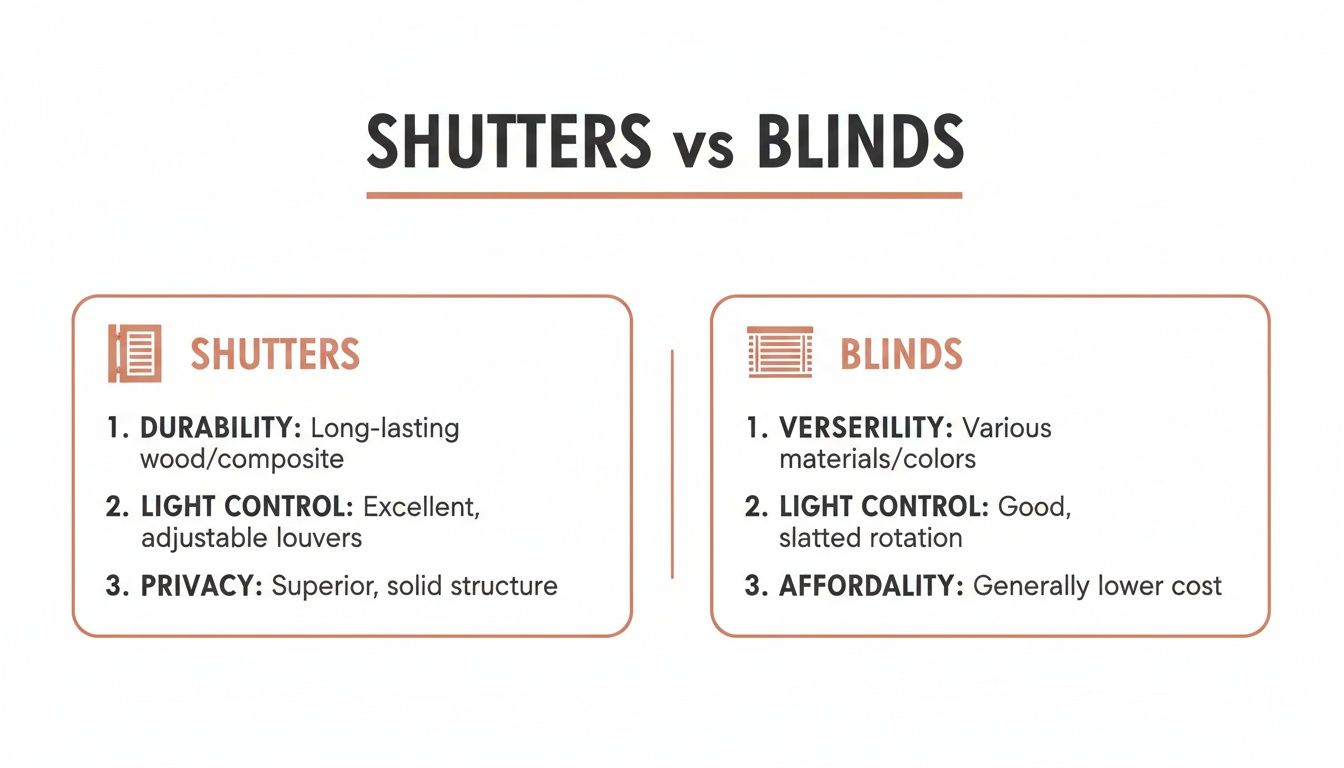
While blinds offer an extensive array of styles and materials, shutters distinguish themselves through superior durability and their ability to make a significant architectural statement.
Quick Comparison: Plantation Shutters vs. Blinds
To simplify the initial consideration, this table outlines the fundamental differences between these two exceptional window treatments.
| Consideration | Plantation Shutters | Blinds |
|---|---|---|
| Primary Role | Permanent architectural feature | Decorative and functional furnishing |
| Material | Hardwood, advanced polysatin | Wood, faux wood, aluminum, vinyl |
| Durability | High; built to last decades | Varies; can be less durable |
| Curb Appeal | High; adds structural character | Understated and clean |
| Insulation | Excellent; high R-value | Moderate; R-value varies |
| Upfront Cost | Higher initial investment | Lower initial investment |
| Resale Value | Can increase home value | Generally does not impact value |
This table clarifies the practical trade-offs, allowing you to align your priorities with the most suitable solution.
Actionable Design Tip: Before you proceed, ask yourself: do you envision your new window treatments as a permanent upgrade to your home’s architecture, or as a flexible design element you might change in the future? Your answer will immediately point you toward the permanence of shutters or the adaptability of blinds.
Comparing Curb Appeal and Architectural Impact
In Westchester County, your home’s exterior presence conveys a distinct impression long before a guest arrives at your door. Window treatments are a critical architectural detail, shaping your home’s character from the curb. This is an area where the distinction between plantation shutters and blinds is most profound.
We encourage you to think of plantation shutters not as window coverings, but as fine, built-in furniture for your windows. As permanent installations, they integrate directly with the window frame, creating a solid, structured aesthetic that becomes part of your home’s architecture. This built-in quality is precisely why shutters are often recognized by appraisers as a lasting, high-end upgrade that can enhance a property’s resale value.
The Architectural Statement of Shutters
Picture the crisp, orderly lines of custom shutters on a stately Colonial in Scarsdale, reinforcing its timeless symmetry. Or imagine them lending sophisticated character to a modern farmhouse in Bedford. Shutters possess a substantial, tangible quality that other treatments cannot replicate.
Shutters do not merely cover a window; they complete it. By adding depth, shadow lines, and a sense of permanence, they elevate a simple opening into a deliberate design feature.
We often custom-match shutter colors to your home’s existing trim, both inside and out. This meticulous detail creates a flawless, cohesive appearance, making it seem as if the shutters were part of the home’s original design. For historic Tudor-style residences in Bronxville, this capability is essential for maintaining architectural integrity while introducing modern performance.
The Understated Presence of Blinds
Blinds, in contrast, offer a more subtle and understated exterior appearance, functioning more as an interior furnishing than an architectural element. From the street, blinds present a clean, uniform line but lack the structural depth and definition of shutters.
Their primary strength is their versatility. If you enjoy refreshing your interiors every few years, blinds provide that freedom. While they contribute to a neat and tidy look, they do not add to the home’s perceived architectural weight or long-term value in the same way shutters do. For a closer look at this classic, versatile option, you can learn about wood blinds in our detailed guide.
Actionable Design Tip: Step outside and photograph your home from the street. Which architectural features do you wish to enhance? If your goal is to highlight the classic structure and symmetry of your windows, shutters are the superior choice. If you prefer a clean, minimal aesthetic that recedes, high-quality blinds will achieve that beautifully.
Mastering Light Control and Privacy
Effective light management is about creating the ideal ambiance in a room while ensuring the privacy you require. This is where the functional differences between plantation shutters and blinds become most apparent. Each offers a distinct method for controlling sunlight and seclusion, directly impacting how your space feels and functions.
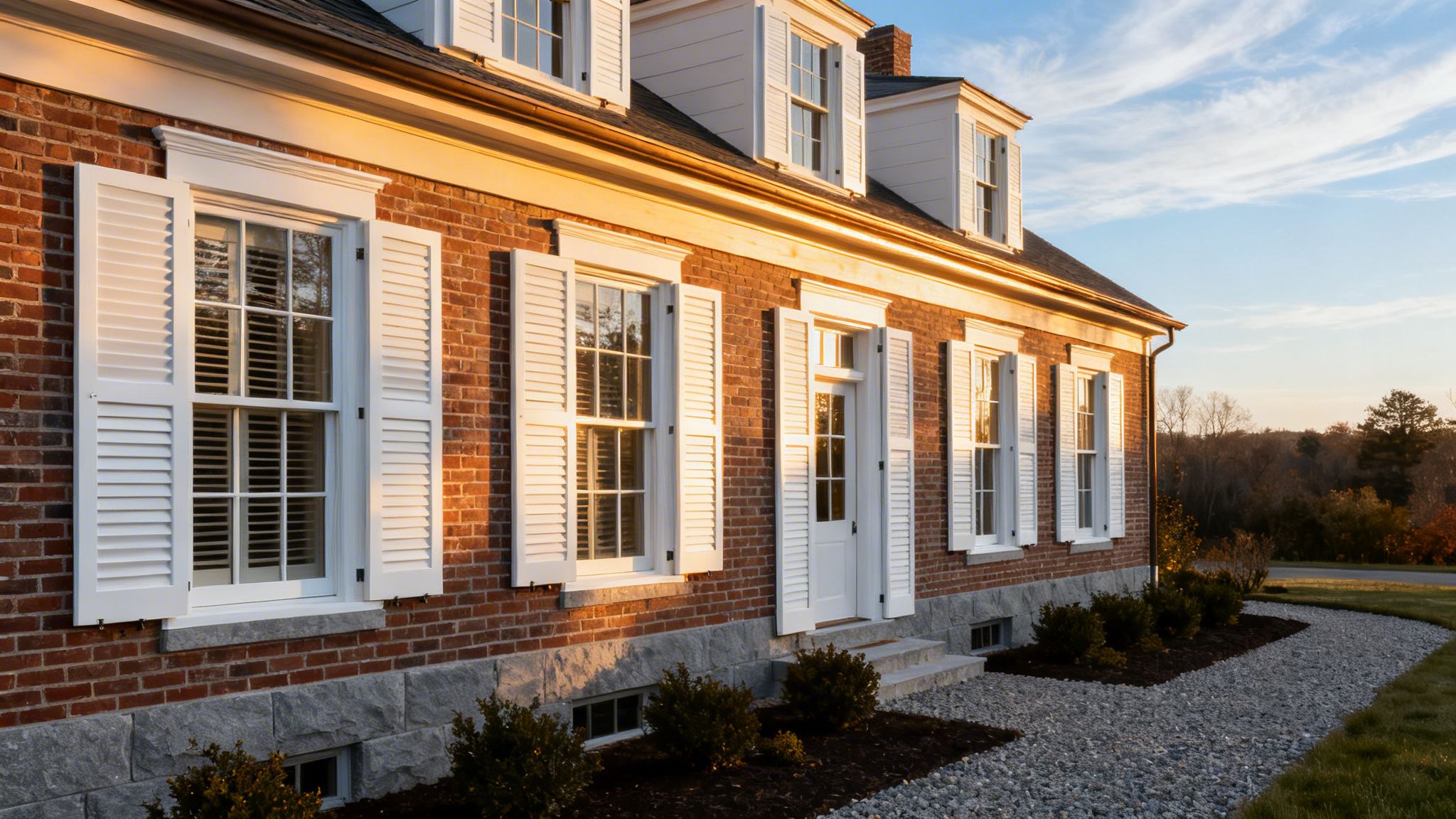
Plantation shutters provide a level of nuanced control that is truly exceptional. Their solid, adjustable louvers allow you to direct light with remarkable precision—bouncing it off the ceiling for soft, ambient illumination or angling it downward to eliminate glare on a screen.
The Versatility of Shutter Louvers
The operational flexibility of shutters is their most compelling feature. For a ground-floor living room in a White Plains home, a divider rail is transformative. It allows you to close the bottom half of the louvers for complete privacy from the street while leaving the top half open to welcome in the afternoon sun.
With shutters, you never have to choose between light and privacy; you can achieve both simultaneously. Blinds cannot replicate this dual functionality with the same elegance.
Furthermore, high-quality shutters provide outstanding UV protection, blocking up to 99% of harmful rays when closed. This is crucial for protecting valuable furniture, art, and hardwood floors, especially in sun-drenched rooms like a south-facing study in a Larchmont home.
The Precision of Modern Blinds
High-quality blinds offer their own brand of precise light management. Premium wood or faux wood blinds allow you to tilt the slats to the perfect angle for fine-tuned control over light entry and glare reduction.
For rooms requiring near-total darkness, such as a master bedroom or home theater, certain blinds are the undisputed solution. For example, a blackout honeycomb shade can eliminate nearly all incoming light, creating the ideal environment for rest or entertainment.
Advanced Hybrid Solutions
For homeowners seeking a unique blend of features, we also design hybrid solutions. For instance, Hunter Douglas Silhouette® shades combine the soft, light-filtering quality of a sheer fabric with the function of blind-like vanes suspended between two layers. This solves the problem of needing privacy in a bathroom without making it feel dark and enclosed.
Actionable Design Tip: Consider the primary function of each room. For common areas like living rooms where you need both privacy and natural light, the divided control of plantation shutters is ideal. For bedrooms where total darkness is the priority, a room-darkening honeycomb shade is a superior tool for the task.
Maximizing Energy Efficiency in the Northeast
In Westchester, where we experience four distinct seasons, maintaining a comfortable home is a matter of smart energy management. Your windows are a primary source of thermal transfer, allowing heat to escape in winter and the summer sun to overheat your interiors. The right window treatment is a critical layer of insulation that can significantly impact your utility costs.
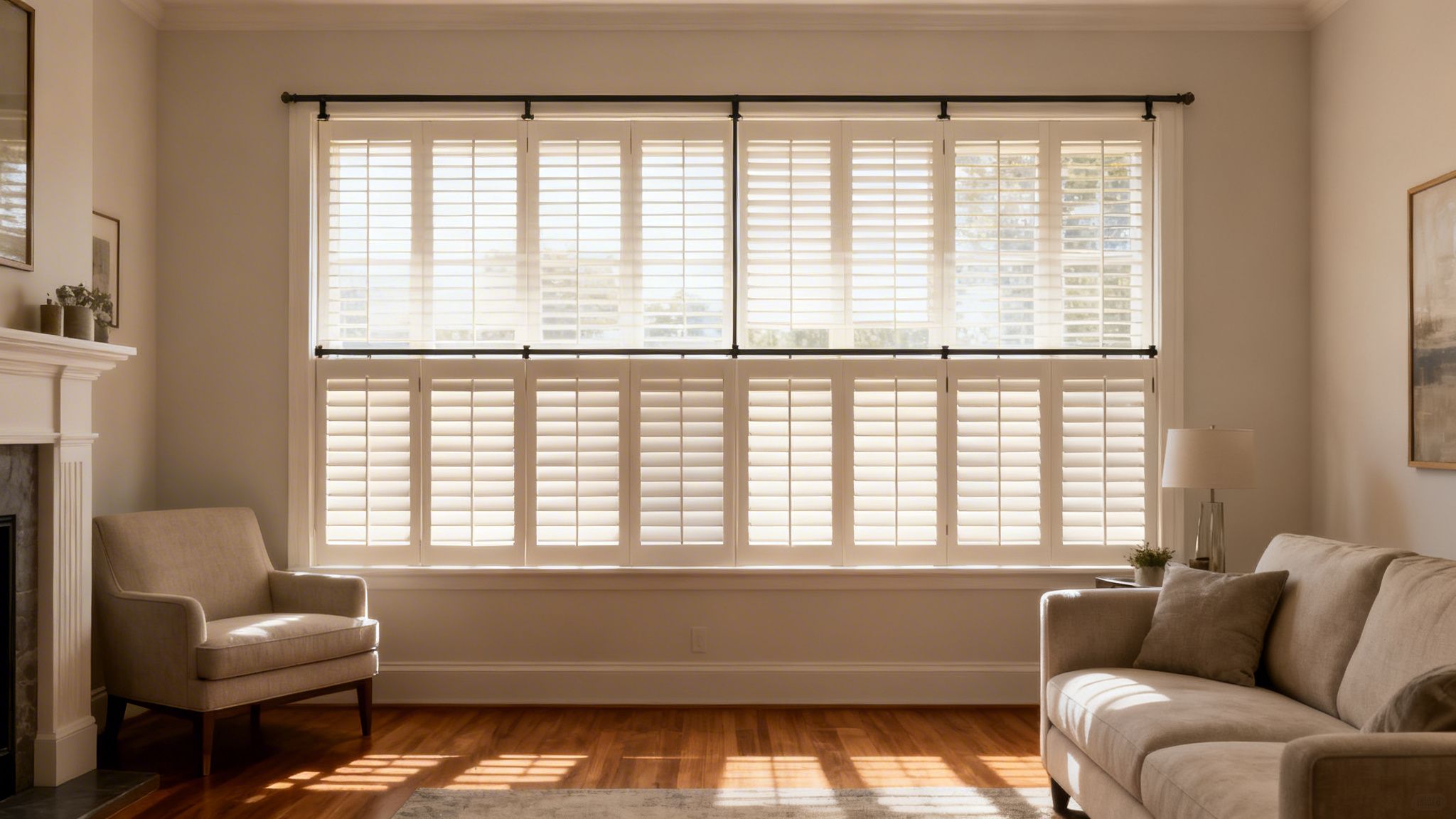
When considering plantation shutters vs blinds, the technical specifications for energy efficiency are telling. The key metric is the R-value, a measure of a material’s resistance to heat flow. A higher R-value indicates better insulation, meaning your HVAC system works less to maintain a comfortable temperature.
The Insulating Power of Plantation Shutters
Plantation shutters, crafted from solid hardwood or advanced polysatin compounds, are engineered for thermal performance. Because we install them to fit precisely within your window frame, they create a pocket of insulating air that drastically reduces drafts and heat transfer. This is a far more effective design than a treatment that hangs in front of the opening.
The technical data confirms their superiority:
- Plantation Shutters: Typically achieve an R-value between 3.0 and 6.0, providing a formidable barrier against outdoor temperatures.
- Standard Blinds: While helpful, blinds generally offer R-values from 1.5 to 4.0, providing more moderate insulation.
The solid construction and precise fit of a shutter create an architectural barrier against Westchester’s winter chill and summer humidity. You are not just covering a window; you are upgrading your home’s energy management system.
Consider a classic Tudor home in Bronxville with beautiful but drafty original windows. Installing shutters can make an immediate, noticeable difference in keeping those rooms consistently comfortable, especially on the north side of the house.
For Maximum Performance, Consider Honeycomb Shades
While shutters are excellent insulators, if your primary goal is maximizing energy efficiency, we often recommend cellular shades. Known as honeycomb shades, their unique design traps air in individual pockets, creating an incredibly effective insulating barrier against the elements.
This innovative construction gives them some of the highest R-values in the industry. For example, Hunter Douglas Duette® Architella® shades can achieve an R-value of up to 7.0. This makes them the perfect solution for rooms that require serious thermal protection, such as a sunroom in Rye that endures intense summer sun or a bedroom facing prevailing winter winds.
Actionable Design Tip: Walk through your home and identify your “problem windows”—those that are noticeably drafty in January or feel like a heat source in July. Prioritizing a high R-value treatment like solid shutters or cellular shades for these specific windows can deliver the greatest return on investment in comfort and energy savings.
Analyzing Durability and Long-Term Value
When you select window treatments for your Westchester home, you are making an investment. In the discussion of plantation shutters versus blinds, the difference in long-term value and performance is where the choice becomes most distinct.
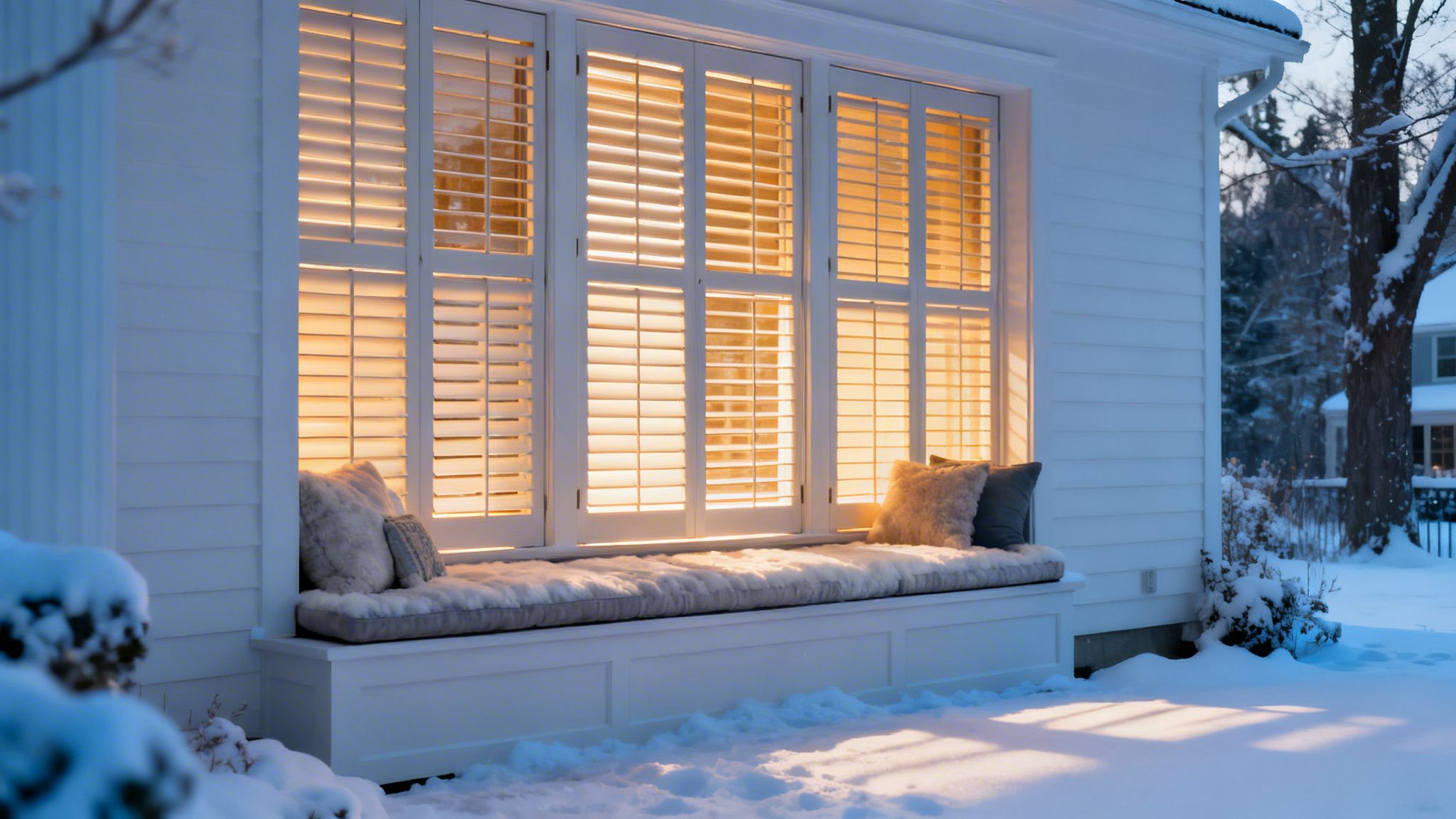
Plantation shutters are engineered for longevity. They are not merely a covering for your window; they become a permanent, structural component. Crafted from solid hardwoods or durable polysatin compounds, they are designed to resist the warping, cracking, and fading that the intense summer sun can inflict.
The One-Time Investment of Shutters
We advise you to think of shutters as a true home upgrade—a single investment that adds lasting character and value. Their solid construction means they are built to last for decades. We partner with premier brands that back their craftsmanship with strong warranties, providing you with peace of mind.
This client preference for permanence and quality is reflected in market trends. This demonstrates a clear shift among homeowners toward durable, value-adding window treatments that are viewed as a long-term asset.
The Lifecycle of Blinds
Blinds, depending on the material, can be more susceptible to daily wear and tear. The cords and tilt mechanisms on some models can be damaged by active children or pets. Over time, certain materials may also discolor from constant UV exposure, particularly in west-facing rooms with views of the Hudson River.
Plantation shutters are an asset, meticulously crafted to endure and enhance your home’s value. Blinds are a furnishing, designed to fulfill a functional or decorative need for a period of time.
While high-quality blinds perform exceptionally well, they are often considered a decorative item that may be replaced as your style evolves or they begin to show their age. This is why we speak of shutters as a lasting home improvement and blinds as a flexible design choice. If the timeless appeal of solid wood is your preference, you can learn more about our custom wood shutters.
Actionable Design Tip: Consider the busiest areas of your home, such as the family room or a main entryway. For these high-traffic spaces, the robust, built-in nature of plantation shutters provides a more durable and worry-free solution compared to treatments with exposed cords or more delicate components.
Exploring Smart Home Integration and Motorization
In a modern Westchester home, convenience is a core component of sophisticated living. This is particularly true for window treatments, where we have moved beyond manual controls to seamless smart-home integration. The goal is to transform static fixtures into intelligent accessories that enhance your daily routine.
Motorization elevates the functionality of both shutters and blinds, though its application differs for each.
Sophisticated Shutter Automation
For plantation shutters, automation focuses on the precise, motorized control of the louvers. This allows you to manage the direction of light with no manual effort. We can integrate motorized tilt systems with leading smart home ecosystems like Lutron, unlocking a new level of environmental control.
This integration allows for:
- Scheduled Scenes: Program your shutters to open with the morning sun in your breakfast nook and tilt closed in your west-facing family room as the afternoon glare intensifies.
- Voice Control: A simple command to your smart assistant can adjust the louvers throughout the room.
- Enhanced Security: Set your shutters to tilt at various times while you are away, creating a convincing lived-in appearance.
The Versatility of Motorized Blinds and Shades
For motorized blinds and shades, the possibilities are nearly limitless. We partner with industry leaders like Hunter Douglas and their PowerView® Automation, as well as the proven reliability of Somfy motors, to deliver unparalleled convenience. There is a motorized solution for virtually any window.
The true elegance of motorization lies in its ability to make the difficult effortless. It transforms hard-to-reach windows in a grand Larchmont entryway or a bank of skylights in a Rye sunroom from an inconvenience into a perfectly managed feature.
With motorized blinds and shades, you can program them to lower automatically during the hottest parts of the day, significantly reducing solar heat gain and lowering your cooling costs. The cordless operation also creates a cleaner aesthetic and is the safest choice for homes with young children and pets. For further reading, we invite you to explore the top reasons to motorize your window treatments.
Actionable Design Tip: Identify the windows in your home that you rarely adjust simply because they are inconvenient to reach. Motorization is the ideal solution to reclaim these windows, integrating them into your daily strategy for managing light, privacy, and ambiance.
Allow Us to Bring Our Expertise to Your Home
You have compared the features and weighed the options in the plantation shutters vs blinds discussion. The next, most crucial step is to see how these window treatments will look and feel within the unique context of your home. This is where theory becomes reality, and how you will make a final decision you will appreciate for years.
An in-home consultation is essential because colors, textures, and light-filtering properties appear entirely different in your home’s natural lighting than under showroom fluorescents. The morning sun in a Larchmont colonial creates a different effect than the soft, diffused light in a Bedford farmhouse. Seeing samples in situ is the only way to ensure a perfect match.
Our Consultative In-Home Process
At Westchester Window Fashions, our process is designed to eliminate guesswork. We are not here to sell you a product; we are here to provide a consultative design service tailored to your home and lifestyle. We handle every technical detail, from precise measurements to flawless installation.
Here is what you can expect when we visit:
- We Listen to Your Vision: We begin by discussing your goals for each room. Are you seeking to block afternoon sun, gain privacy, or achieve a specific design aesthetic?
- We Assess Your Space: Our design consultants will evaluate your windows, noting architectural style, sun exposure, and daily functional needs.
- We Bring the Showroom to You: We arrive with a curated collection of high-quality samples from trusted brands like Hunter Douglas, Graber, and Norman. You can feel the materials, compare colors against your walls, and see how they interact with your existing decor.
We believe the best decisions are made from the comfort of your own home. Our role is to offer expert guidance and make a complex choice feel simple, enjoyable, and rewarding.
Ready to see how we can transform your space with solutions designed exclusively for you?
Experience the Westchester Window Fashions difference. To explore the possibilities for your home, schedule your Complimentary In-Home Design Consultation in Westchester today by visiting us at https://westchesterwindowfashions.com.


