

Morning light is pouring into your breakfast room. The view is beautiful, but so is the line of sight from the street. You want sunlight on the walls, not a full reveal of your daily routine.
That is the moment most homeowners realize standard shades force a bad compromise. Open means exposed. Closed means cave-like. In a Westchester home, especially one with large windows, layered rooms, and changing light throughout the day, that tradeoff feels dated fast.
The Art of Light Control in Your Westchester Home
In a Scarsdale colonial, the problem often shows up in the front-facing living room. You want the room bright for morning coffee and reading, but you do not want passersby looking directly in. In a Rye waterfront property, the issue shifts. Glare rolls across the room from above, while lower-level privacy still matters in the evening.
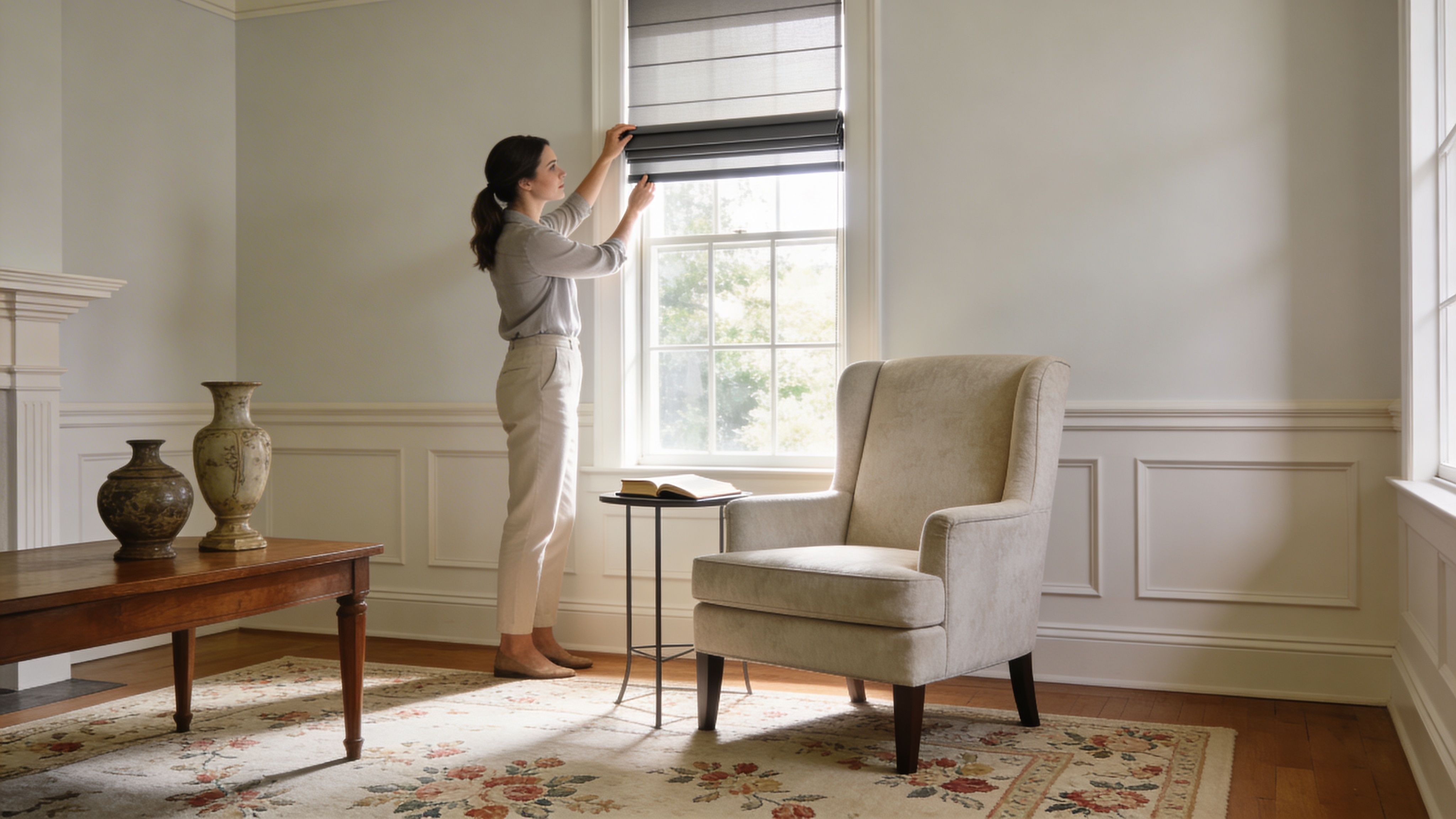
Top down bottom up control solves that in a way ordinary shades do not. It lets you shape light instead of blocking it. That distinction matters in homes with tall windows, detailed millwork, and rooms that need to feel polished from morning through night.
Why the old open-or-closed choice fails
A single-position window treatment treats all light the same. That is the mistake.
Light entering from the top of the window behaves differently than light entering at eye level. The first can brighten a room and soften the ceiling plane. The second can create glare and reduce privacy. If you care about comfort and presentation, you need independent control over both.
In Westchester, that becomes more important through the seasons:
- Winter mornings: You want daylight without exposing the room to the street.
- Summer afternoons: You need to cut harsh upper glare before it overheats the space.
- Year-round evenings: You want privacy that does not make the architecture feel shut down.
A more refined way to live with natural light
We advise clients to stop thinking about shades as simple coverings. In a well-designed home, they are environmental controls. They manage privacy, visual comfort, and the mood of a room.
That is why top down bottom up control belongs in serious conversations about whole-home design. It is not a novelty feature. It is a practical strategy for homes where natural light is one of the property’s strongest assets.
Actionable Design Tip: Walk through your home at three times of day. Note where you want daylight but not visibility from outside. Those are your strongest candidates for top down bottom up control.
What is Top-Down Bottom-Up Control
The cleanest way to understand top down bottom up control is this. You are not operating one fixed shade position. You are controlling two movable boundaries within one elegant shade system.
That gives you a visible band of light exactly where you want it. High for daylight. Low for view preservation. Centered for privacy. The effect is more precise than blinds tilted halfway and far more refined than leaving a shade partly raised.
The engineering behind the movement
This feature works through dual-rail mechanical architecture with independent tensioning control, which allows a level of light filtration conventional single-rail systems cannot achieve, as described by Blinds.com’s explanation of top-down bottom-up shade mechanics.
The important takeaway is practical, not theoretical. The shade fabric stays tensioned between two movable rails, top and bottom. You can lower the top section to admit overhead light while raising the bottom section to maintain privacy at eye level.
That is why these shades feel so different in daily use. They are not just adjustable. They are precise.
What that precision looks like in real rooms
In a Bronxville sitting room, you may want the lower half of the window covered because the house sits close to the street. At the same time, you can open the upper portion to pull in soft daylight and keep the room from feeling boxed in.
In a modern Armonk kitchen with strong sun exposure, you may decide to leave a narrow opening at the top during the day. That lets the room stay bright while reducing direct glare on countertops and screens.
Top down bottom up control is especially useful with:
- Cellular shades: Strong option for insulation and soft light diffusion
- Roman shades: Better when the room needs more decorative presence
- Woven shades: Ideal when texture matters as much as privacy
- Light-filtering fabrics: Appropriate for living spaces where you want glow, not blackout
Why professional installation is not optional
These systems depend on proper rail alignment and locking performance. If the rails are even slightly off, the shade can sag, slip, or sit unevenly. In a high-end interior, that is not a minor flaw. It is the first thing your eye notices.
We treat top down bottom up control as a specification, not an add-on. It needs to be matched to window proportions, fabric weight, room use, and the way you live.
Actionable Design Tip: If you are considering this feature, ask for room-by-room recommendations instead of choosing one operating style for the entire house. Front rooms, baths, and bedrooms rarely need the same solution.
The Tangible Benefits for Your Westchester Home
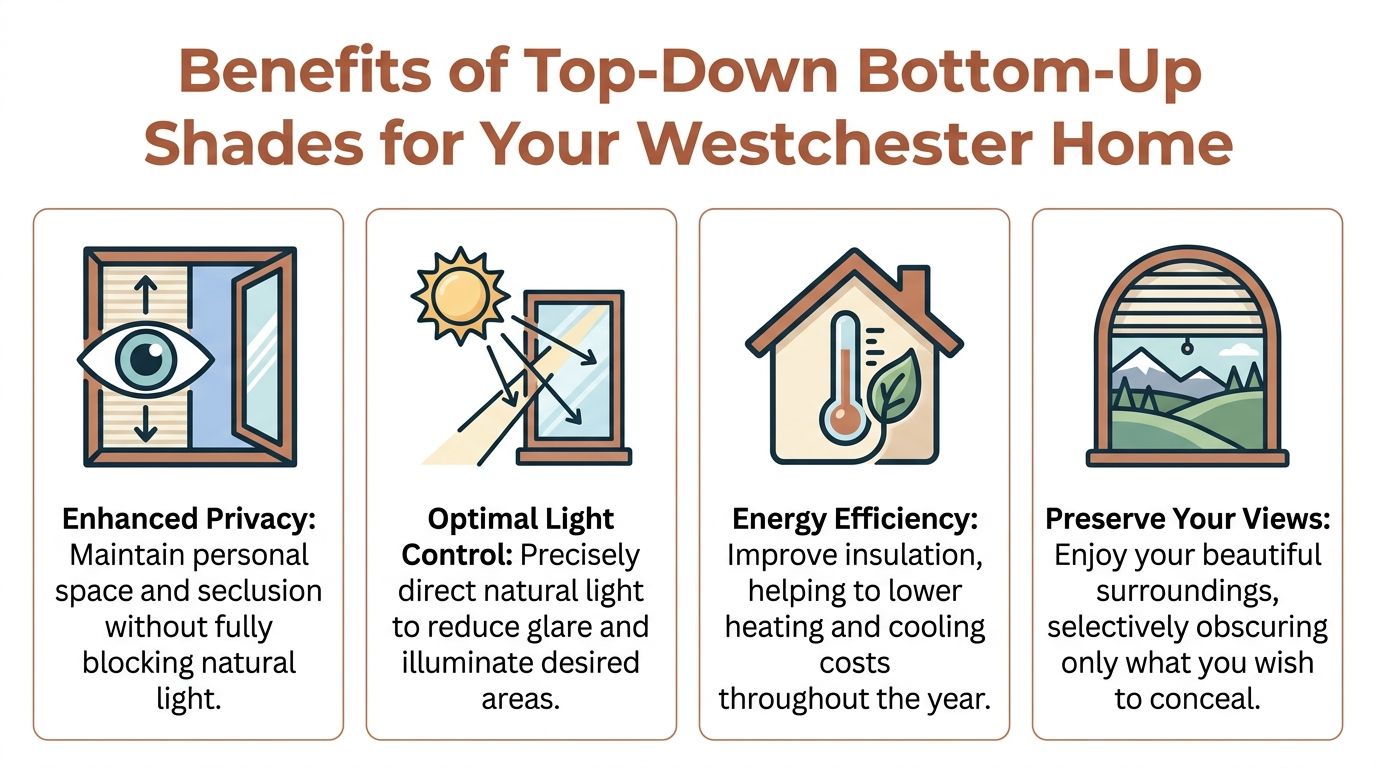
Most homeowners start with privacy. They stay interested because of what top down bottom up control does for light quality and seasonal comfort.
The value is strongest when you look at the system through three lenses: what it protects, what it improves, and how it adapts as conditions change.
Privacy without shutting down the room
A Tudor in Bronxville often sits closer to the street than homeowners expect when they first move in. The front room gets excellent daylight, but eye-level exposure can make the space feel public.
Top down bottom up control fixes that cleanly. Keep the lower portion covered and open the upper band. The room still reads bright and welcoming, but the sightline from outside is interrupted.
This is also why we recommend it for bathrooms, dressing areas, and breakfast rooms. You get seclusion without the heavy, fully closed look that standard shades create.
Better daylighting and less glare
Natural light improves a room only when it lands in the right places. Too low, and it creates screen glare. Too direct, and it can flatten furnishings, wash out finishes, and make the room feel hot.
A well-designed system behaves more like a responsive environment than a fixed covering. As noted in this ecosystem analogy of top-down and bottom-up control, hybrid control adapts to changing limiting factors. That is exactly what advanced window treatments should do in a home. They balance daylight needs with privacy and energy priorities as conditions shift through the day.
For a sun-heavy great room, we often prefer light-filtering cellular shades. For a bath or den, woven materials can introduce texture while still controlling the opening band.
Energy comfort that feels architectural
You asked for technical specifics, so here is the direct answer. Insulation value and UV filtering vary by product, fabric, liner, and construction. We do not assign blanket R-values or UV percentages because those numbers depend on the exact system selected.
What we can say with confidence is this. Cellular shades with top down bottom up control are one of the strongest choices when you want insulation support in winter and more disciplined solar management in summer. In the Northeast, that matters. Westchester homes deal with cold windows in January and intense sun in July. The right shade helps the room feel stable in both.
A few examples:
- Pound Ridge great room: Cellular shades help soften drafts and regulate bright exposures.
- Rye family room: Controlled top opening admits daylight while limiting strong lower glare.
- Scarsdale primary bath: Light-filtering woven shades preserve privacy and maintain a finished design story.
Views stay part of the design
One of the biggest mistakes in luxury homes is over-covering good windows. If you paid for the view, frame it. Do not erase it.
Top down bottom up control lets you preserve portions of the scenery, garden, or treeline while concealing what you do not want seen. That selective editing is far more elegant than full exposure or full closure.
Actionable Design Tip: Prioritize this feature on windows where the upper view is sky, trees, or water, but the lower view includes street traffic or neighboring sightlines. That is where the payoff is most immediate.
Choosing Your Control Style Manual vs Motorized Systems
This decision should be straightforward. If the windows are easy to reach and used occasionally, manual can work well. If the windows are tall, numerous, or central to your daily routine, motorization is the stronger choice.
When manual control makes sense
Modern manual systems are cleaner than older corded products. Cordless operation suits guest rooms, secondary bedrooms, and smaller-scale spaces where adjustments are simple and infrequent.
Manual top down bottom up shades are often appropriate for:
- Standard-height bedroom windows
- Guest suites
- Small studies or secondary sitting rooms
- Homes where you prefer simple operation without automation
If you are comparing operating styles, our article on cordless blind operation without visible strings gives useful context on how contemporary manual systems are designed for a cleaner look.
Where motorization earns its place
Motorized top down bottom up control is not just about convenience. It is about precision, consistency, and better use of the home.
For hard-to-reach windows over staircases, kitchen sinks, or two-story great rooms, manual operation becomes impractical fast. In those cases, motorization is the right specification. It also makes sense in primary suites, media rooms, and whole-home projects where you want shades to follow routines instead of depending on constant adjustment.
Motorized systems are especially compelling when you want:
- Scheduled privacy at night
- Morning daylight routines
- Consistent shade positions across a wall of windows
- Safer operation in homes with children or pets
- Integration with Lutron or Somfy-compatible controls
Side-by-side comparison
| Feature | Manual Control | Motorized Control |
|---|---|---|
| Daily operation | Simple for accessible windows | Effortless across single rooms or whole-home layouts |
| Best use case | Smaller rooms and standard-height windows | Large windows, high windows, and automation-focused homes |
| Visual consistency | Depends on individual adjustment | More precise, repeatable positions |
| Smart-home compatibility | No | Yes, with compatible systems |
| Convenience | Good | Excellent for routines and frequent adjustments |
| Premium design intent | Appropriate in select rooms | Stronger fit for large-scale, integrated projects |
My recommendation is direct. Do not force one operating method onto every room. Mix systems intelligently. Use manual where access is easy and usage is occasional. Use motorization where precision and convenience materially improve the way the house functions.
Actionable Design Tip: Put motorization first on windows you cannot comfortably reach, windows you adjust every day, and any room where multiple shades need to move together.
Ideal Applications for Your Home’s Architecture
Top down bottom up control is not one-room technology. It works best when matched to architecture, exposure, and the purpose of each space.
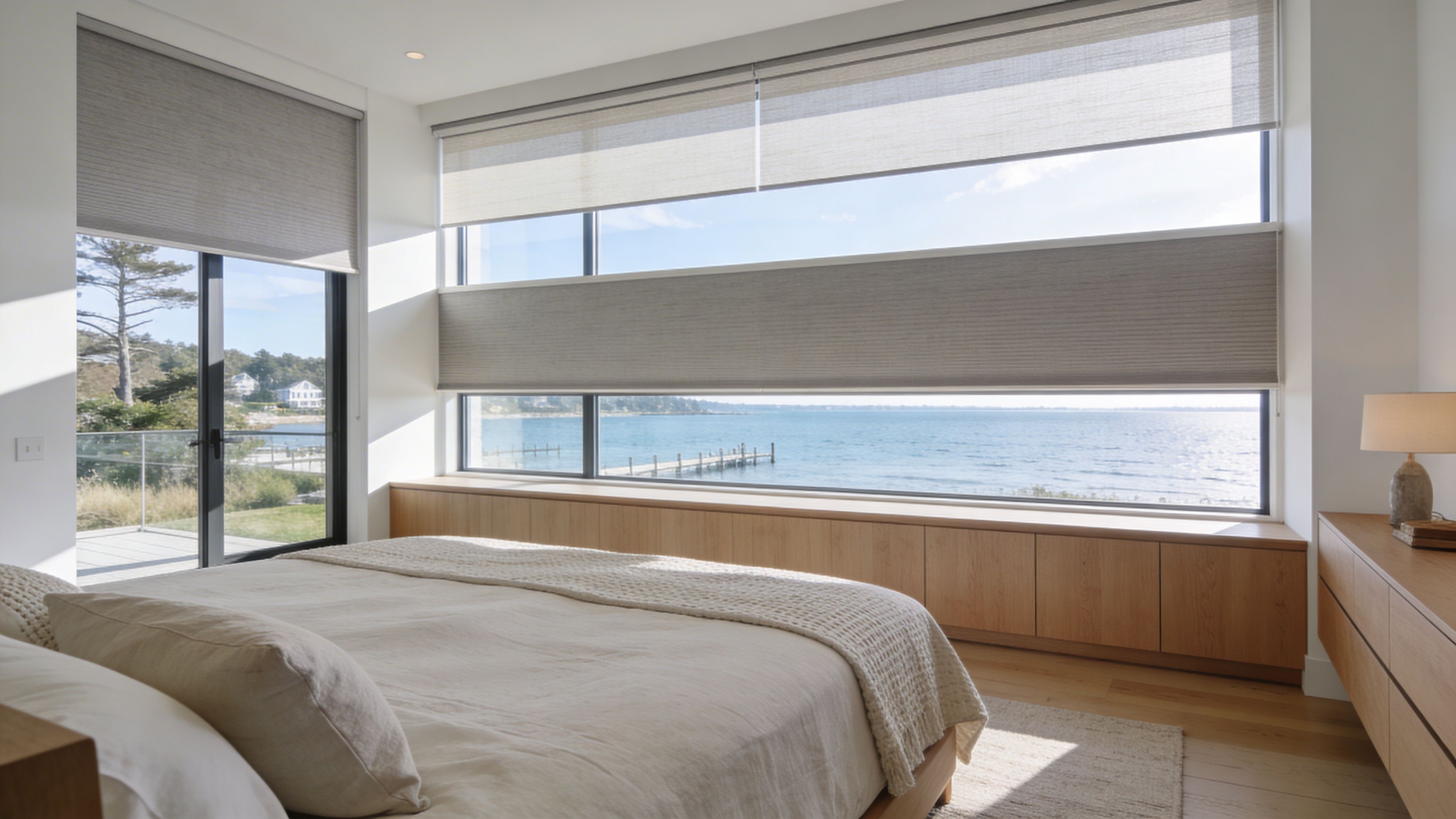
Great rooms and large expanses of glass
In a Pound Ridge estate, a large great room can feel spectacular and drafty at the same time. Big windows create presence, but they also expose the room to shifting sun and winter discomfort.
That is where top down bottom up cellular shades become highly practical. They soften the scale of the glazing, preserve natural light, and support a more comfortable interior envelope. If your home includes oversized openings, our guide to window treatment strategies for large windows is a useful companion.
Bedrooms that need darkness and calm
A Larchmont primary suite has a different job. The room must support rest.
For that setting, blackout cellular shades with top down bottom up functionality can be a smart fit when privacy is essential and daytime flexibility still matters. You may keep the lower portion protected while introducing controlled daylight from above during dressing hours, then close the system fully at night for a quieter sleep environment.
Bathrooms where texture matters
Scarsdale and Bronxville bathrooms often benefit from something softer than shutters and more refined than a basic blind. A light-filtering woven shade with top down bottom up control adds warmth and tactile interest while keeping the room private.
This is especially effective in baths with beautiful tile, brass fixtures, or custom vanities. The shade should support the material palette, not compete with it.
Kitchens, landings, and transitional spaces
These are the rooms homeowners forget until glare becomes irritating.
A breakfast nook facing east, a second-floor landing with strong sun, or a kitchen window over the sink all benefit from selective opening. You can admit daylight from above, maintain lower privacy where needed, and avoid the hard on-off look that standard roller shades often create.
A few pairings we recommend often:
- Drafty room: Top down bottom up cellular shades
- Decorative front room: Roman shades with refined fold structure
- Spa-like bath: Woven shades with filtered light
- Bright kitchen: Light-filtering fabric shades with controlled upper opening
Actionable Design Tip: Choose the product by room function first, then by style. A bedroom needs sleep performance. A bath needs privacy and moisture-appropriate materials. A living room needs balance and visual softness.
Seamless Integration with Smart Home Automation
A motorized shade is only luxurious when it behaves predictably. If the system feels clumsy, disconnected, or overly rigid, it is not an upgrade. It is an annoyance.
That is why automation needs to be designed as a hierarchy. Whole-home commands should set broad behavior, but room-level control must remain available when daily life changes.
Whole-home scenes and room-by-room overrides
Ecological systems show both top-down and bottom-up control, and that idea maps cleanly onto a smart home. Centralized commands from an app represent one layer of control, while individual room adjustments represent another. As explained by the Dauphin Island Sea Lab’s discussion of top-down and bottom-up systems, expert installation matters because these control hierarchies need to work in harmony rather than conflict.
That is exactly how we approach automated window treatments. Your “Away” scene might lower shades throughout the home for privacy and solar management. At the same time, you should still be able to adjust the breakfast room or primary bath independently when your schedule shifts.
The platforms that matter
For most high-end homes, the key names are familiar:
- Lutron: Excellent for unified lighting and shade control
- Somfy-compatible systems: Strong option for reliable motorized operation
- Hunter Douglas PowerView: Often considered for app-based convenience
- Control4 and Savant: Appropriate when shades are part of a larger home automation ecosystem
If you are exploring that level of integration, our overview of motorized shades and smart blinds in Armonk homes shows how these systems fit into daily living.
Where professional design matters most
Automation can fail in subtle ways. The shades move at the wrong time. Rooms feel over-programmed. One family member overrides the system constantly because the presets were designed around theory rather than habit.
A proper specification accounts for orientation, privacy needs, room function, and how the household lives. In one room, the schedule may follow sunrise. In another, it may prioritize privacy before dusk. That is not something a generic retrofit handles well.
The point of smart-home window treatments is not remote control. It is harmony between architecture, technology, and routine.
Actionable Design Tip: If you want automation, define two things before selecting a platform. Which rooms need scheduled behavior, and which rooms must always allow quick manual override.
The Westchester Window Fashions Difference
The right top down bottom up control strategy does not start with fabric books. It starts with judgment.
Business strategist Andy Grove argued that the strongest results come from balancing bottom-up input with top-down direction, as discussed in this summary of Grove’s leadership framework. That same balance applies to window treatment design. Your routines, privacy preferences, and aesthetic priorities are the bottom-up reality. Professional design strategy and technical specification are the top-down discipline.
That is how strong projects come together. Not with generic recommendations. Not with a one-style-fits-all package. With a room-by-room plan that respects the house and the way you live in it.
Westchester Window Fashions handles this through in-home consultation, curated product selection, and professional installation for custom shades, woven styles, Roman shades, and motorized systems that can integrate with broader smart-home planning. In homes across Scarsdale, Rye, Armonk, and beyond, that process matters more than any single product feature.
My recommendation is direct. If your home has windows that need daylight and privacy at the same time, top down bottom up control deserves serious consideration. If your home also demands clean execution, design continuity, and dependable operation, expert specification is not optional.
Actionable Design Tip: Bring your priorities to the consultation in this order. Privacy concerns first, light preferences second, automation goals third, and decorative style fourth. That sequence leads to better decisions.
Schedule a Complimentary In-Home Design Consultation in Westchester with Westchester Window Fashions to evaluate top down bottom up control in the context of your actual rooms, architecture, and daily routine. We will help you choose the right fabrics, operating systems, and smart-home integration strategy so your window treatments look right, perform properly, and feel effortless to live with.


