

A living room can be beautifully furnished and still feel unresolved. We see it often in Westchester homes with generous windows, strong architecture, and thoughtful interiors. The upholstery is right. The rugs are right. The lighting is right. Yet the windows still read as functional instead of finished.
That usually happens when the upper portion of the window has been left visually bare. In a Scarsdale colonial, that can make tall windows feel slightly disconnected from the rest of the room. In a Rye Tudor, exposed hardware can interrupt otherwise graceful detailing. In a newer Greenwich or Armonk home, the problem is different but just as noticeable. Roller shades and tracks do their job, but the room lacks a final architectural gesture.
Valances for living room spaces solve that problem when they’re designed correctly. They aren’t an afterthought. They frame the view, conceal what should be hidden, and connect the window treatment to the scale of the room. A good valance can make a layered treatment feel deliberate rather than assembled.
The difference is rarely the idea of a valance itself. It’s the execution. Proportion, fabric, integration with shades or drapery, and the way the top treatment relates to crown molding, ceiling height, and light all determine whether the result feels current or dated.
An Introduction to The Polished Living Room
In many Westchester living rooms, the windows do the heaviest visual lifting in the space. They bring in winter light, frame mature landscaping, and in some homes capture long seasonal shifts from bright summer afternoons to gray Northeast mornings. When those windows are large, the treatment above them matters more than most homeowners expect.
A valance is often the missing layer. Not because every room needs ornament, but because many rooms need structure. The top of a window is where the eye goes first. If that line is unresolved, the whole room can feel slightly unfinished.
Where the room starts to feel complete
A custom valance changes how the window relates to the architecture around it. It can make a broad opening feel intentional. It can soften the transition between formal millwork and a cleaner shade below. It can also quiet visual noise by concealing tracks, headrails, and brackets that don’t belong in the foreground.
That matters in homes with strong architectural language. A traditional living room in Bronxville or Larchmont often needs a treatment that respects trim profiles and historic character. A newer open-plan home needs the opposite. It needs restraint, clean lines, and proportion.
A polished room doesn’t always need more decoration. It usually needs better resolution at the points where architecture and function meet.
Why homeowners reconsider valances now
The old stereotype still lingers. Many people hear “valance” and think of overstuffed swags or fussy trim. That isn’t how the best rooms are being finished today. The modern valance is more architectural, more integrated, and much more disciplined.
It also works harder than it used to. In a layered treatment, the valance can unify drapery, shades, and motorization into one coherent design. That makes the room feel calmer, not busier.
Actionable Design Tip: When your living room feels almost finished but not fully composed, look up first. The top of the window is often where the design breaks down, and where a custom valance can restore balance.
Beyond Decoration The Modern Role of a Valance
A living room can have beautiful upholstery, strong lighting, and well-scaled furniture and still feel unresolved at the windows. In Westchester homes, that usually happens at the top of the opening, where exposed shade components, awkward proportions, or a weak transition to the trim pull the eye off course. A custom valance corrects that problem with precision.
The current version is far more disciplined than the old stereotype suggests. Flat profiles, board-mounted shapes, and custom fabric treatments are being specified because they solve architectural and technical problems, not because they add ornament for its own sake. According to a review of current trends by Indigo & Luxe, designers are favoring cleaner, custom profiles over more elaborate traditional forms.
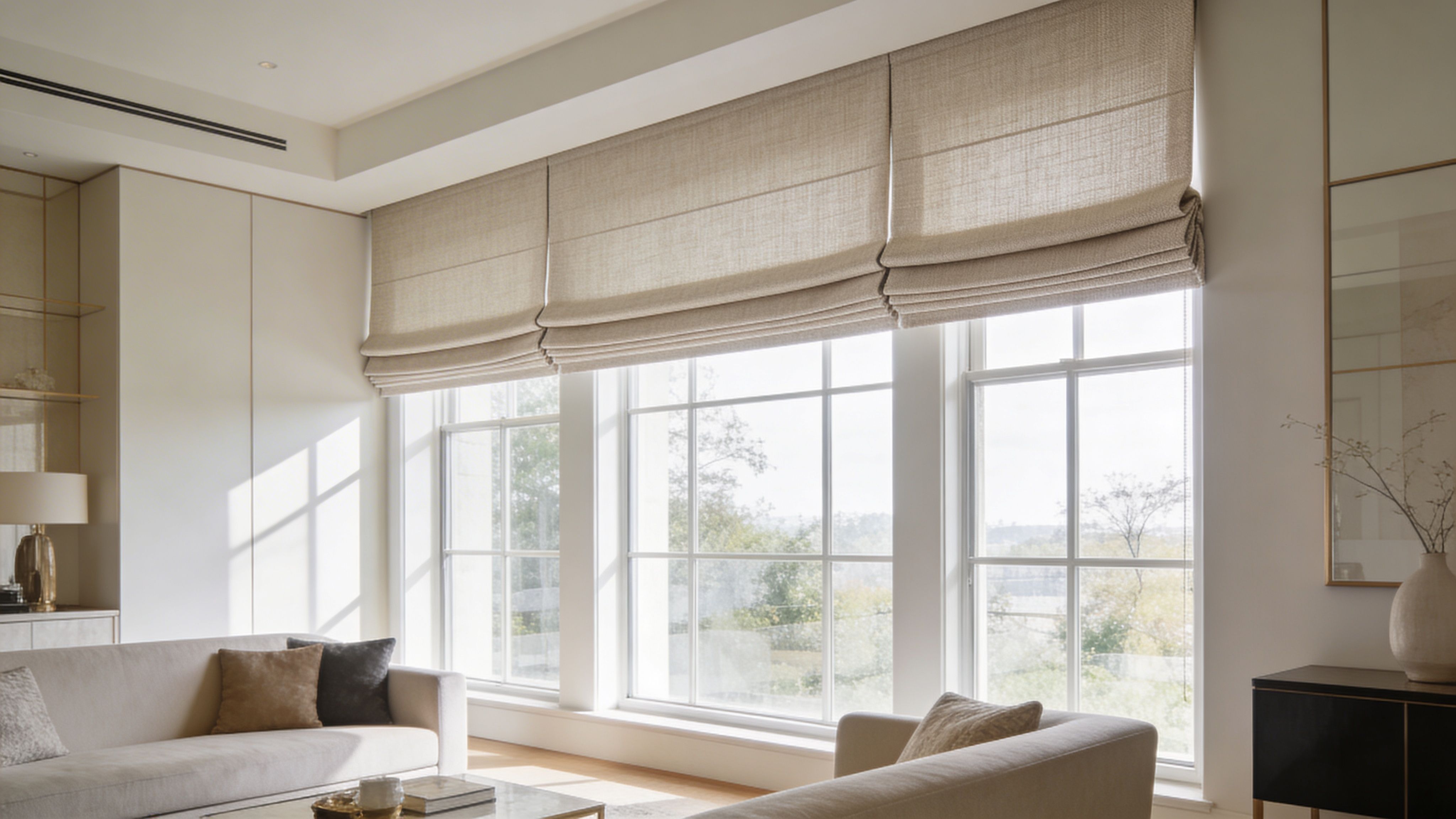
They hide what should stay in the background
This is the most practical job a valance does. Living rooms now depend on roller shades, Roman shades, traverse rods, drapery tracks, and motorized hardware to control light, privacy, and glare. Those systems perform well, but many of them are not attractive when left exposed.
A valance covers the headrail, brackets, wiring paths, and track components so the room reads as architecture first and equipment second. In a large family room with a wall of glass, that difference is immediate. Instead of a band of visible mechanics across the top, the eye sees a finished line that belongs with the room.
That matters most in spaces with:
- Tall glazing: Exposed components can make a dramatic window wall feel commercial rather than residential.
- Layered treatments: A top treatment gives the shade and side panels a controlled, unified termination point.
- Formal rooms: Decorative trim, plaster detail, and traditional casing profiles benefit from a cleaner visual transition.
They correct proportion and improve scale
Windows are not always proportioned for the furniture plan beneath them. I see this often in older colonials and Tudors, where the sill height, casing depth, or ceiling line creates a slightly uneasy relationship with sofas, fireplaces, or built-ins. A well-sized valance introduces a clear horizontal line that settles the elevation.
That correction is subtle, but it changes how the whole room feels. A board-mounted valance can visually lower an overly tall opening. On a very wide window, it can contain the span and keep the treatment from looking stretched. In bright rooms with strong southern or western exposure, it also helps the top of the window feel less exposed and more intentional.
They support performance, not just appearance
In high-end homes, window treatments are expected to do more than look refined. They need to handle glare on art and screens, protect furnishings from sun, and support comfort through Westchester’s seasonal swings. A valance contributes by covering light gaps at the top of a shade and by allowing the full system to be mounted and detailed more carefully.
That does not turn a valance into an insulation product on its own. It does, however, make layered treatments work better. When paired with shades or drapery, the top treatment helps reduce visual and functional leakage where hardware would otherwise interrupt the line.
They complete the room with discipline
A good valance is not filler. It solves a visible problem, strengthens the window’s relationship to the architecture, and gives functional treatments a more precise finish.
It can add:
- Fabric presence without the weight of full drapery coverage
- Cohesion between shades, panels, and mounting details
- A precisely crafted result that off-the-shelf top treatments rarely achieve
Practical rule: If the valance is not concealing hardware, correcting proportion, or strengthening a layered treatment, it usually does not belong.
The strongest valances for living room spaces are restrained and specific to the room. They perform their work without drawing attention. The result is a living room that feels resolved, technically sound, and appropriate to the house around it.
Actionable Design Tip: Before selecting a valance style, identify the exact job it needs to do. Conceal hardware, correct scale, reduce top light gaps, or unify multiple treatments. Once that job is clear, the shape and fabrication become much easier to specify.
Curating Your Aesthetic Popular Valance Styles for Westchester Homes
Valances have been part of formal window design since the 18th century, and by 1900, 70-80% of affluent U.S. households had incorporated them into high-end interiors, as noted in this historical overview of different styles of valances. That history matters, but what matters more in practice is choosing a style that suits your home.
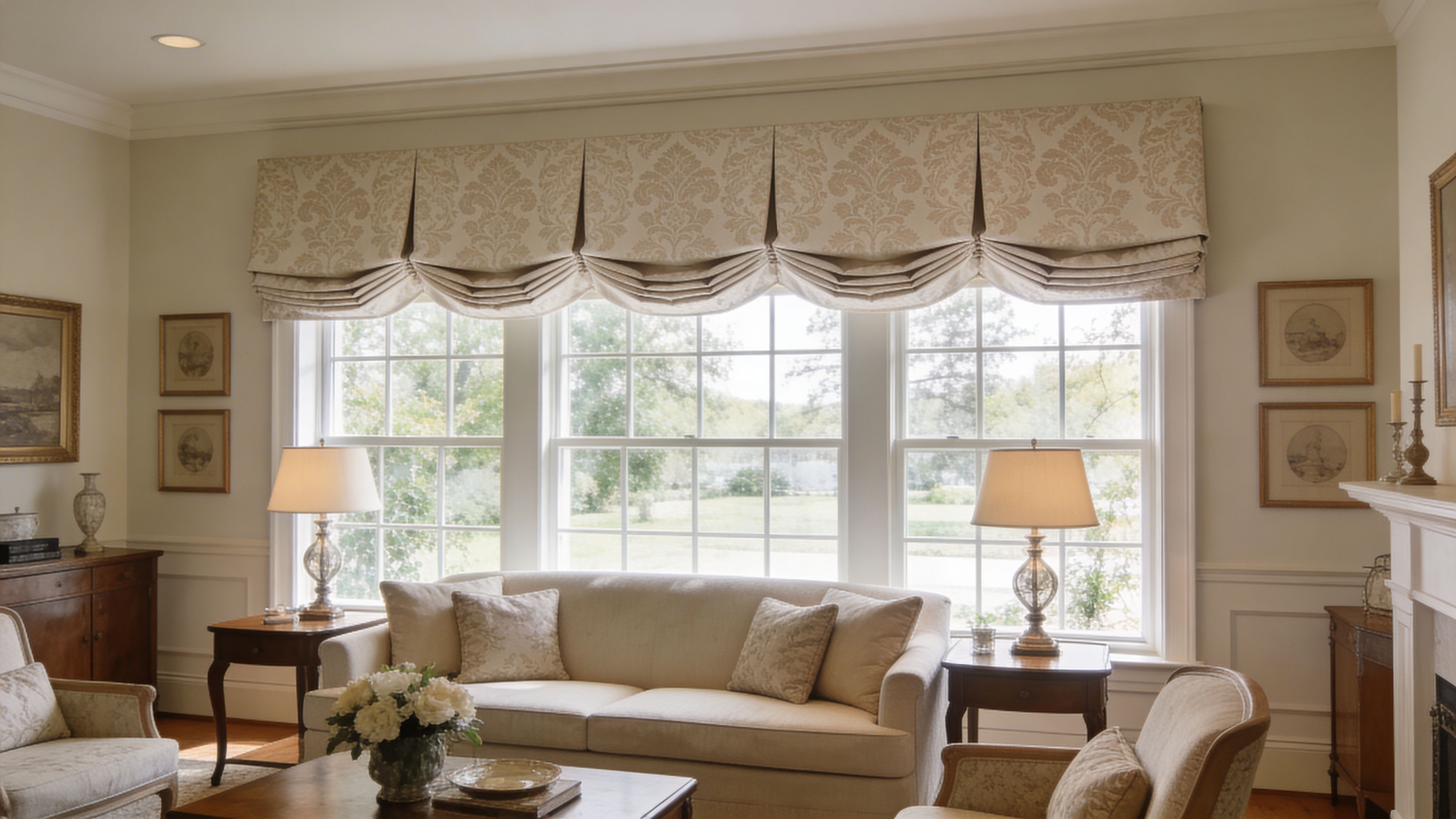
Custom cornices for clean architecture
A cornice is often the right answer when the room needs definition. It has a crisp profile, reads as architectural, and works beautifully in homes with strong millwork or simpler modern lines.
This style performs well in:
- Scarsdale colonials that need structure over wider windows
- Armonk contemporary homes where a softer valance would feel out of place
- Living rooms with motorized shades that need a discreet place to conceal hardware
Velvet, performance woven fabrics, and refined textured neutrals all work well here. The key is restraint. The shape carries the design, so the fabric doesn’t need to overperform.
Soft swags for formal traditional rooms
In the right setting, swags still have a place. The mistake is using them where the architecture doesn’t support them. In a historic Tudor or Georgian-style home, a carefully scaled soft valance can echo the room’s original formality.
Silk and silk-look fabrics tend to suit this language best. They bring drape and light reflection without looking stiff. Used well, they soften heavy stone fireplaces, dark wood casework, and older divided-light windows.
What doesn’t work is forcing this style into a casual family room or a sleek renovation. Then it reads as costume rather than architecture.
Traditional doesn’t mean elaborate. It means proportionate, context-aware, and disciplined.
Pleated and gathered shapes for transitional homes
Some living rooms need softness, but not ceremony. A pleated or lightly gathered valance can bridge that middle ground. It introduces fabric and comfort without the rigidity of a cornice or the formality of a swag.
This style is useful when:
- the room has mixed furnishings, both classic and casual
- you want to soften roller shades or Romans below
- the seating area needs a more inviting visual tone
These are often successful in family-facing living rooms where the architecture is good, but not highly ornate.
Board-mounted valances for a current luxury look
This is one of the most versatile options for valances for living room applications today. It gives a clean face, hides the mechanics behind it, and works with both drapery and shades.
Neutral velvet and silk-like fabrics often give this style the most refined presence in formal rooms. The silhouette is current because it’s edited.
| Style | Best fit | Solves |
|---|---|---|
| Cornice | Modern or classic architectural rooms | Loose window scale, visible hardware |
| Swag | Formal traditional homes | Hard edges, overly severe window lines |
| Pleated valance | Transitional interiors | Rooms that need softness without heaviness |
| Board-mounted valance | Layered luxury treatments | Integration of shades, drapery, and clean top lines |
Actionable Design Tip: Match the valance to the architecture first, then to the fabric story. When those two are reversed, the treatment often looks decorative instead of integrated.
The Art of the Pairing Integrating Valances with Shades and Drapery
A living room window rarely performs one job. In a Westchester home, it may need to control glare on a bright southern exposure, protect upholstery, preserve privacy after dark, and still look correct against detailed millwork or a two-story wall of glass. Pairing the valance with the right shade or drapery is how those demands get resolved without making the room feel overdesigned.
The pairing has to be technical before it becomes decorative. I look first at what must happen at the glass. Solar control, privacy, insulation, and operation. Then I build the visible top treatment so the whole composition reads as part of the architecture, not as separate products stacked on one window.
Valances with shades
This is often the strongest solution for living rooms that need clean function during the day. A board-mounted valance can conceal the top of roller shades or Romans, hide brackets and light gaps, and give the opening a finished line that relates to crown, casing, or ceiling height.
The trade-off is scale. If the valance projection is too shallow, the shade hardware crowds it. If it is too deep, the treatment starts to intrude into the room and can make a moderate-size living room feel heavier than it should. That balance matters even more in homes with divided-light windows, arched casings, or closely spaced mullions.
Roman shades under a precisely fitted valance work well in rooms that need softness and insulation. Roller shades under a more architectural valance suit modern estates and transitional interiors where clients want the view to stay prominent.
Valances with drapery
A valance paired with drapery solves a different set of problems. It can conceal traverse rods or motorized tracks, unify multiple window widths, and correct visual proportion when the ceiling is tall but the window head sits low.
In historic Tudors and older Colonials, I often use the valance to visually tie drapery panels into the room’s trim language so the treatment feels original to the house. In newer construction, the same approach can make wide expanses of glass feel more intentional and less exposed.
For living rooms that need a fuller fabric story, custom drapery can sit below or beside the valance depending on the architecture. Homeowners comparing layered options can get more direction from these living room curtain ideas.
Where layered pairings perform best
Some combinations earn their keep quickly:
- Valance plus roller shade: best for glare control, clean lines, and hiding shade hardware
- Valance plus Roman shade: best for softness, insulation, and a quieter visual profile than full drapery
- Valance plus side panels: best for framing views and adding fabric without needing daily drapery operation
- Valance plus full drapery: best for formal rooms, acoustic softness, and stronger light and privacy control
Good pairings also depend on installation conditions. Deep casings, stone surrounds, radiators below windows, and HVAC registers all affect projection, return, and fabric choice. Those details decide whether the treatment feels integrated or slightly off every time you walk into the room.
Actionable Design Tip: If you are layering a valance with another treatment, decide which layer is doing the functional work and which one is finishing the architecture. That single decision usually clarifies the right proportions, fabric weight, and mounting method.
Experience The Westchester Window Fashions Difference
A good valance can look finished on its own. A custom valance solves problems you only notice after living in the room.
In Westchester, those problems are rarely generic. One living room may have a drafty leaded-glass bay in a 1920s Tudor. Another may have oversized steel-framed windows facing western sun. In both cases, the valance has to do more than decorate the top of the opening. It has to account for projection, light spill, insulation at the glass line, and how the treatment sits against original millwork or a very clean contemporary wall.
The Technical Advantage Custom Solutions for Westchester Homes
Custom work starts with the window condition, not the fabric book. I measure casing depth, check for crown interference, note radiator placement, and look at how far the glass sits back from the wall plane. Those details determine whether a valance should be board-mounted, shaped to follow architecture, or sized to conceal a secondary treatment without looking heavy.
Performance matters just as much as appearance. In older homes, a properly proportioned valance with a shade or drapery layer can soften heat loss near the glass and reduce the visual harshness of winter light. In newer homes with large expanses of glazing, it can hide roller hardware, control glare at seating level, and give scale to walls that otherwise feel flat. Homeowners deciding between functional lower layers often benefit from understanding the difference between blinds and shades before finalizing the valance profile.
The architecture also changes the engineering. A historic room often needs returns, shaped hems, or custom brackets to respect uneven plaster lines and deep trim. A modern estate may call for longer projections, wider boards, and tighter fabric control so the top treatment reads crisp against broad glass.
Where expertise shows up
It shows up in technical decisions that affect the finished room every day:
- Projection and return sizing so the valance clears casing details and properly covers hardware
- Fabric selection by structure so the treatment holds its shape instead of collapsing or rippling over time
- Mounting strategy for stone surrounds, shallow drywall returns, or difficult ceiling conditions
- Light management planning so the valance works with the room’s orientation, not against it
- Coordination with motorized shades so wiring, battery access, and serviceability are resolved before fabrication
For more advanced homes, battery-free Matter-over-Thread motorized valances can reduce integration latency by 70% in smart-home ecosystems, according to this overview of battery-free Matter-over-Thread motorized valances. In larger homes with many grouped windows, that kind of responsiveness supports a smoother whole-home experience.
The result feels easy because it was planned carefully
Clients usually respond to the finished look first. The room feels settled. The window feels properly scaled. Light control feels easier because the treatment was built around the room’s actual conditions, not adapted from a standard size after the fact.
That level of finish comes from careful design, accurate fabrication, and installation that respects the architecture. A valance should look effortless. It gets there through precise planning.
Actionable Design Tip: Before approving any custom valance, review the section drawing, mounting method, and lower treatment together. In complex living rooms, proportion and performance are decided long before the fabric is installed.
If you’re considering custom valances for living room windows and want guidance suited to your home, schedule a Complimentary In-Home Design Consultation in Westchester with Westchester Window Fashions. We bring the showroom to you, evaluate the architecture and light in person, and design a fully integrated solution that looks refined and performs beautifully.


