

Selecting the right window treatments begins with one foundational question: blinds or shades? While the terms are often used interchangeably, their core difference is simple yet significant. Blinds are ‘hard’ window treatments with adjustable slats, while shades are ‘soft’ treatments made from a single piece of fabric.
This distinction is more than a definition—it dictates how you will control light, ensure privacy, and manage your home’s energy performance. As your local design authority, we are here to help you navigate these choices with technical expertise and an eye for sophisticated design.
The Definitive Comparison of Blinds and Shades
Choosing the right window covering is about more than aesthetics; it’s about finding a practical, elegant solution that enhances your home and lifestyle. For homeowners here in Westchester County, this means striking a balance between beautiful design and the real-world demands of light control, privacy, and energy efficiency through our distinct Northeast seasons.
Whether you reside in a sun-drenched colonial in Scarsdale or a historic Tudor-style residence in Bronxville, the fundamental difference between blinds and shades will shape how you interact with the light in your space every day.
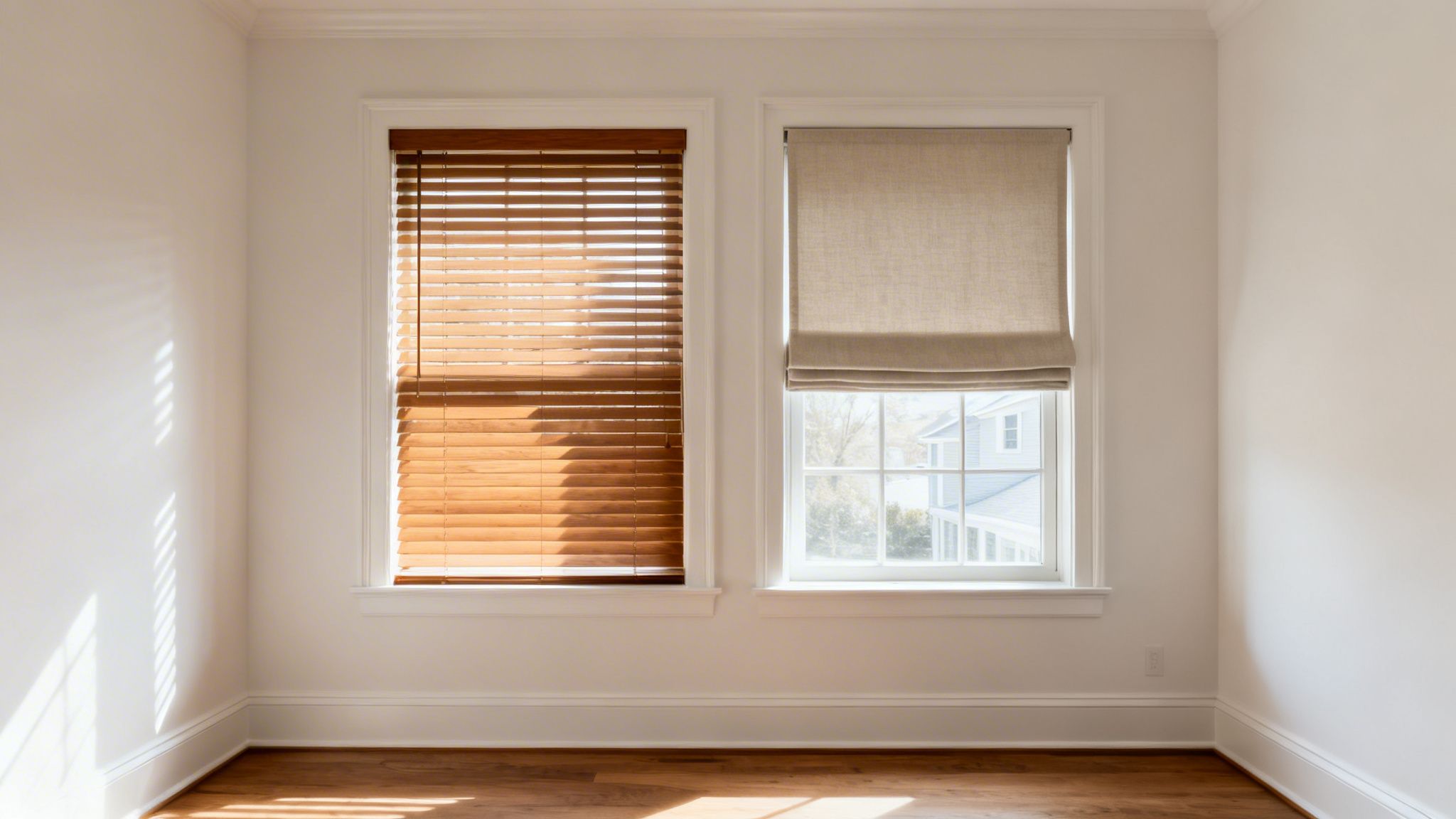
The structural difference has a profound impact on performance. It’s no surprise that in the global market, blinds captured over 58% of revenue share in 2024. Their slatted design offers incredibly precise light control—a perfect solution for eliminating glare in a media room or home office without sacrificing all-day brightness.
Conversely, shades excel in energy efficiency. Cellular shades, for example, feature a unique honeycomb structure that traps air. This innovation can help reduce heat loss during a chilly White Plains winter, providing tangible energy savings and enhanced comfort.
Quick Comparison: Blinds vs. Shades
To clarify the choice, let’s distill the core differences into a simple table. This provides a high-level view of how each type functions, helping you align your needs with the right solution.
| Attribute | Blinds | Shades |
|---|---|---|
| Structure | Hard material with individual, tiltable slats (louvers) | Single, continuous piece of soft fabric |
| Light Control | Precise, directional control by tilting slats | Filtered, uniform light based on fabric opacity |
| Best For | Adjusting light throughout the day, privacy with visibility | Softening a room, insulation, and complete blackout |
Think of it this way: blinds offer micro-control over light and view, while shades provide a softer, more holistic approach to light filtering and insulation. You can see how the structure of blinds delivers on these promises by exploring our curated collection of custom blinds.
Actionable Design Tip: Begin your decision-making process by considering structure. Do you require the ability to constantly adjust the angle of light, such as to block afternoon sun on a TV while keeping the room bright? Blinds are your answer. If your primary goal is to create a soft, uniform glow or maximize insulation, you should begin by exploring shades.
When you are deciding between blinds and shades, the most defining choice is the material. This single decision branches into countless style and functional possibilities. It’s where the architectural world of blinds meets the soft, textural universe of shades, and where our expertise ensures the selection performs for your Westchester home.
For a stately colonial in Bronxville with elegant crown molding, the rich, warm look of Hunter Douglas hardwood blinds is often a perfect match. They add a sense of weight and permanence that beautifully complements traditional architecture. A practical example is using them in a formal study to precisely control light while maintaining a classic aesthetic.
However, a bathroom or kitchen requires a different approach, as real wood is unsuitable for high-humidity areas. Here, we pivot to premium faux wood blinds from brands like Graber. These provide the same sophisticated look but will never warp or crack from moisture, ensuring a cohesive design throughout your home.
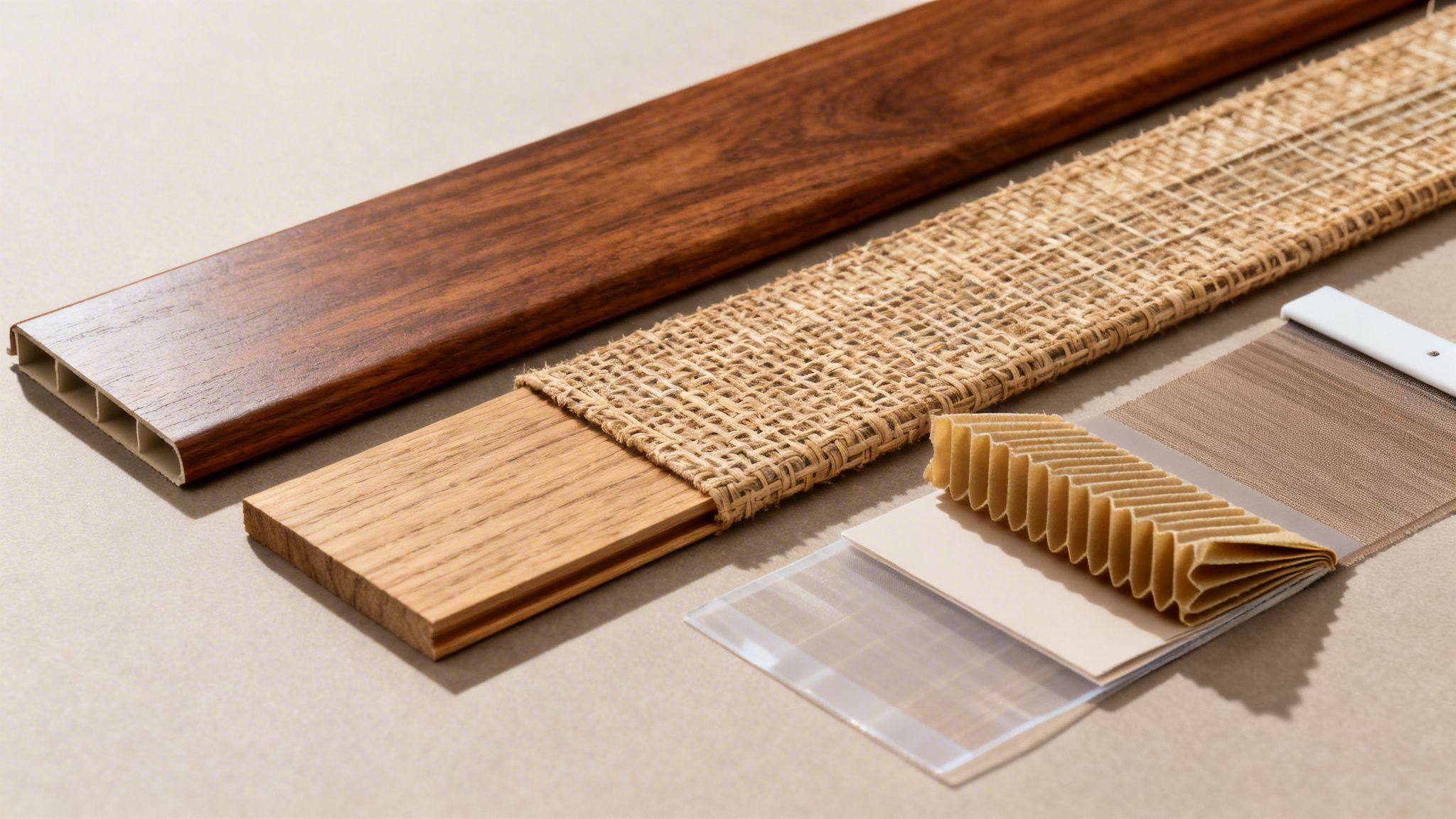
The Diverse World of Shade Fabrics
Shades, in contrast, open a vast canvas of fabrics, textures, and opacities. This is where you can truly infuse your personality into a room and solve specific challenges, from enhancing energy efficiency to protecting your waterfront view.
For homeowners focused on energy conservation, the conversation naturally turns to cellular shades. Their honeycomb design creates air pockets that deliver impressive R-values (a measure of thermal resistance). This technical feature makes a real difference in retaining heat during our cold Northeast winters and blocking solar heat in the summer—an elegant solution for any home.
But sometimes, the goal is purely aesthetic. That’s where other materials get their moment to shine.
- Woven Wood Shades: These shades bring a natural, organic feel indoors, perfect for creating the breezy, sophisticated look suited to Rye’s coastal homes. They solve the problem of harsh light by gently filtering it, connecting your living space to the outdoors.
- Solar Shades: For a modern home with expansive windows overlooking the Long Island Sound, sleek solar shades are an incredible option. They can block up to 99% of damaging UV rays, protecting your fine art and furnishings without sacrificing your magnificent view.
- Roman & Roller Shades: These two styles offer an enormous range of possibilities through fabric. If you’re weighing these options, our detailed comparison of Roman shades vs roller shades is a great resource to explore their unique strengths.
Let’s break down how these materials stack up side-by-side.
Blinds vs Shades Material and Style At a Glance
| Feature | Blinds (e.g., Wood, Faux Wood) | Shades (e.g., Cellular, Roller, Woven) |
|---|---|---|
| Material | Hard slats made of wood, faux wood, or metal. | A single piece of soft, continuous fabric. |
| Aesthetic | Structured, classic, and architectural. | Soft, textural, and adds warmth or sleekness. |
| Best For… | Traditional homes, offices, and rooms needing precise light tilting. | Modern homes, bedrooms, and spaces focused on insulation or texture. |
| Moisture? | Faux wood is excellent for bathrooms/kitchens; real wood is not. | Depends on fabric; solar/vinyl shades work well in damp areas. |
| Style Range | Classic, timeless appeal. Limited by material type. | Nearly endless variety in color, pattern, opacity, and texture. |
Our role is to guide you through these options, focusing on solutions that address your unique challenges while elevating your home’s aesthetic.
Actionable Design Tip: When we visit for your complimentary consultation, we bring our mobile showroom to you. We hold a real wood slat against your actual window trim and compare it directly with a high-end faux wood version. For shades, we unroll fabrics in the room so you can see exactly how the light filters through. This eliminates guesswork and ensures a result you will love.
Mastering Light Control and Privacy in Your Home
Achieving the perfect balance of light and privacy is a delicate art, and it’s where the true differences between blinds and shades become most apparent. When our clients ask, “What’s the difference between blinds and shades?” the conversation often comes down to the quality of light they desire.
Blinds provide a level of nuanced control that is difficult to replicate. You can tilt the slats just so, redirecting sunlight toward the ceiling to brighten a room without creating glare on your TV. For a ground-floor room in a bustling town like White Plains, this solves the problem of maintaining privacy from the street while still allowing natural light to enter.
Fabric Opacity and Modern Solutions
Shades manage light and privacy through fabric opacity. Your options range from sheer fabrics that gently filter sunlight while preserving your view, to total blackout materials essential for a dark, peaceful bedroom or an immersive media room.
A sophisticated solution we often recommend is dual shades—sometimes called “zebra” shades. These combine alternating sheer and opaque fabric bands into a single unit, providing the versatility to switch from gentle light diffusion to full privacy instantly. They are a perfect fit for a modern Westchester home.
While roller shades are a hugely popular choice, leading the shades category with a 35% market share, blinds often win out when it comes to directional light control. Industry data shows that blinds command nearly 60% of the automated window treatment market. This is largely because their rigid, tiltable slats can reduce UV damage to your valuable furnishings by up to 75%, a key performance difference. To see how automation trends are evolving, you can explore more insights on the global market.
Actionable Design Tip: For an east-facing bedroom where intense morning sun disrupts sleep, a blackout cellular shade is a transformative solution. In contrast, for a living room with a beautiful view you wish to preserve, a light-filtering solar shade will cut glare and prevent UV fading while keeping you connected to your landscape.
Improving Energy Efficiency and Insulation
In Westchester County, a home designed to handle our distinct seasons isn’t a luxury—it’s a necessity. The right window treatments are more than a design choice; they are a crucial layer of insulation against frigid winter drafts and intense summer sun. When we compare blinds and shades, this is where the difference becomes crystal clear.
Shades, specifically cellular shades, hold a significant advantage. Also known as honeycomb shades, they are engineered with geometric pockets that trap air. This brilliant design creates a powerful insulating barrier, dramatically slowing the transfer of heat through your windows.
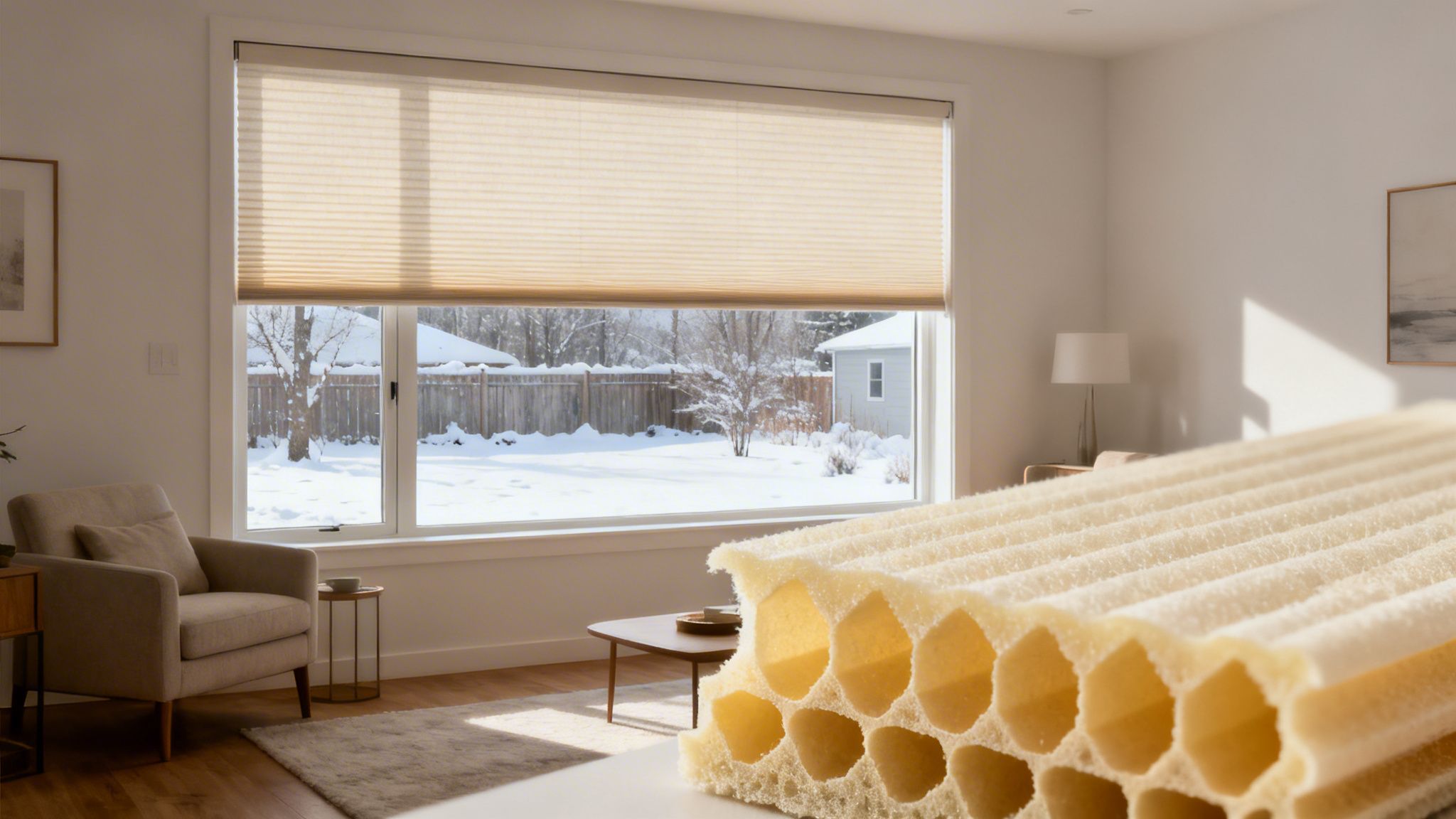
This structural benefit delivers real-world results, keeping your home warmer in the winter and noticeably cooler in the summer. While high-quality wood blinds offer a natural layer of insulation, the small gaps between each slat inevitably allow more air to pass through.
Maximizing Your Home’s R-Value
A material’s insulating power is measured by its R-value—the higher the number, the better it resists heat transfer. A top-tier cellular shade can significantly boost a window’s R-value, making it one of the most effective energy-saving window treatments available.
The right choice depends on context:
- For Drafty Windows: In a classic Harrison colonial with beautiful but less-efficient original windows, the insulation from a cellular shade is a game-changer. It solves the problem of cold drafts, improving comfort and reducing energy bills.
- For Newer Windows: In a modern, well-sealed home, you might prioritize the architectural beauty of wood blinds, as the windows themselves are already providing high energy efficiency.
For a north-facing master bedroom that feels chilly in winter, maximizing warmth is paramount. We often recommend Hunter Douglas Duette® Architella® cellular shades due to their class-leading R-values. This is a technical solution that delivers measurable comfort.
These are the critical factors we help you weigh during a consultation. It is about assessing each window’s unique situation to find a treatment that performs as beautifully as it looks.
Actionable Design Tip: When we visit your home, we provide specific R-value data for our cellular shades. We explain how these figures translate into tangible energy savings, especially for those frustratingly cold or sun-beaten windows, empowering you to make an informed investment.
Integrating Automated Solutions for a Modern Home
Motorization transforms your window treatments from a manual task into a smart, convenient component of your home. While both blinds and shades can be automated, their function and the benefits they offer differ significantly. This is a key part of the “blinds vs. shades” discussion for a modern, connected home.
Motorized blinds offer precise, on-demand control over light. With a button press or voice command, you can fine-tune the slat tilt to perfection. Imagine scheduling your blinds to tilt open slightly at sunrise, then close fully at night for privacy—all without leaving your bed.
The Power of Smart Integration
We specialize in high-end automation from Somfy, Lutron, and Hunter Douglas PowerView, which integrate seamlessly with smart-home platforms. While market data shows that manual blinds still hold a 55.4% market share, automated solutions are gaining ground rapidly as homeowners seek greater convenience.
Motorized shades deliver effortless elegance. They glide up or down with a silent, graceful motion that feels incredibly sophisticated. They are the perfect solution for hard-to-reach windows, such as those in a two-story great room in Armonk or over a soaking tub where cords are impractical.
For more inspiration, explore our guide on motorizing your window treatments.
We specialize in programming custom “scenes” that fit your lifestyle. For example, a ‘Movie Night’ scene can lower all your shades, dim the lights, and create the perfect cinematic atmosphere—all with a single command. This is the pinnacle of smart-home luxury.
Actionable Design Tip: We always recommend motorization for hard-to-reach skylights, large banks of windows where manual operation is a chore, and any room where you want to set a specific mood on a schedule. During our consultation, we demonstrate the quiet, powerful motors we use and discuss seamless integration with your existing smart-home system.
Making the Right Choice for Your Westchester Home
So, after exploring the difference between blinds and shades, which is right for you? The best window treatment is the one that solves your specific challenges while elevating your home’s unique style. This is where our consultative approach at Westchester Window Fashions provides true value.
During our Complimentary In-Home Design Consultation, we guide you through the options by asking the right questions. We seek to understand the room’s function, your privacy concerns, and how light changes throughout the day. This conversation is the key to designing the perfect custom solution.
Designing for Your Lifestyle
For a classic dining room in a historic Larchmont home, we might suggest elegant Roman shades to introduce softness and a sophisticated color palette. For a child’s playroom, however, durable cordless blinds offer an ideal mix of safety and practical light control. Our role is to be your local design authority, guiding you to a choice that is both beautiful and functional.
This decision tree can help you visualize how your goals point toward the ideal motorized solution.
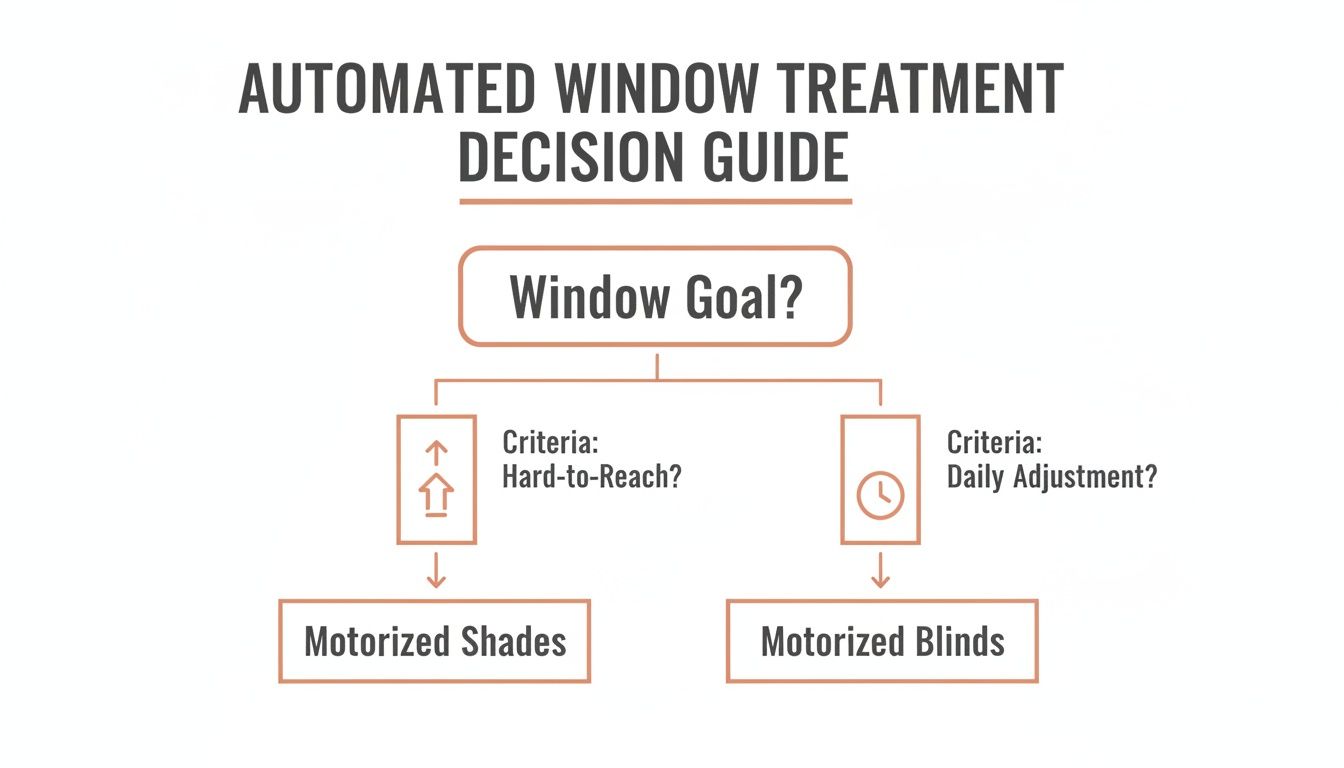
As the infographic shows, the choice between motorized blinds and shades often comes down to your daily routine and the window’s accessibility. Every solution we design is backed by our meticulous professional installation, and if something’s not right, we come back and make it right.
Actionable Design Tip: Before our visit, consider the primary goal for each window. Is it enhancing privacy, achieving precise light control, improving energy efficiency, or making a purely aesthetic statement? A clear objective helps us collaborate effectively to design the perfect custom solution for you.
Frequently Asked Questions About Blinds and Shades
As you consider the choice between blinds and shades for your Westchester home, specific questions naturally arise. Understanding these nuances is key to a confident decision. We have compiled answers to the questions we hear most often during our in-home consultations.
Think of this as your guide to durability, performance, and long-term value.
Which Is More Durable, Blinds or Shades?
Durability depends on material quality and craftsmanship. High-end blinds, especially those made from genuine hardwood or premium faux wood composites, are incredibly resilient. They are built to withstand daily use and often feel like a permanent, architectural upgrade, solving the problem of finding a long-lasting treatment for high-traffic areas.
Shades, being fabric-based, can be more susceptible to wear. That is why we exclusively specify performance fabrics engineered for superior longevity and stain resistance from premier brands like Hunter Douglas and Graber. Their robust construction and warranties ensure your investment is protected.
Are Blinds or Shades Better for Insulation?
For pure thermal performance, cellular shades are the undisputed champion. This is a critical factor for managing energy costs through our Northeast seasons. A practical example is using them on large, south-facing windows to block summer heat gain, or on north-facing windows to prevent winter heat loss.
The honeycomb design of a cellular shade is engineered to trap air, creating a powerful insulating barrier. While wood blinds offer some insulation, cellular shades provide maximum energy efficiency, translating directly into lower heating and cooling bills.
Can I Get Total Blackout with Blinds?
Blinds with tightly closing slats can achieve significant room darkening, but you will always see faint “light leakage” around the edges of each slat.
For true, 100% blackout conditions—a necessity for home theaters or for light-sensitive sleepers in a north-facing master bedroom—we always recommend a dedicated blackout shade. When installed with specialized light-blocking side channels, the system ensures no light can creep in, providing ultimate darkness and privacy.
What Is the Cost Difference Between Blinds and Shades?
The price of window treatments varies based on material, size, operating system, and brand. Generally, high-quality faux wood blinds or standard roller shades are more accessible, while custom Roman shades in designer fabrics or motorized hardwood blinds represent a more significant investment.
We encourage you to consider long-term value over upfront cost. This includes the energy savings from insulating shades, the extended lifespan of premium blinds, and the profound impact the right window treatment has on your home’s ambiance and resale value.
Actionable Design Tip: Create a priority list for your windows. Identify which rooms absolutely require maximum light control (e.g., bedrooms) and which need extra durability (e.g., a mudroom). This approach helps us focus your budget on achieving the best functional value where it matters most.
Schedule Your Complimentary In-Home Design Consultation in Westchester
The best way to truly understand which window treatment is right for you is to see the materials in your own home. Experiencing samples in your light, next to your furniture, removes all guesswork. At Westchester Window Fashions, we bring our mobile showroom and design expertise directly to you.
We are dedicated to providing sophisticated solutions and meticulous installation, whether you are managing intense sun in a Rye living room or preserving the historic charm of a Scarsdale colonial. We will help you navigate every option to find the perfect balance of style, performance, and technical integration for your home.
Ready to transform your home? Contact Westchester Window Fashions today to schedule your Complimentary In-Home Design Consultation in Westchester and discover the perfect window treatments for your home.


